Nima: AI Personal Assistant & Android Phone Automation Agent Source Code
Nima is an AI assistant that talks by voice, remembers what matters across chats and, on Android, acts on the phone with approval: sending texts, opening apps and tapping through tasks while reading the screen to verify each step. Sold as a full asset sale with web, Android, iOS and desktop code for OEMs and enterprise teams.
Screenshots

About this product
Most voice assistants stop at answering questions. Asking a phone to actually do something across apps, such as sending a text, opening an app or tapping through a multi-step task, still means doing it by hand. Building an agent that can see the screen, act on it and remember context across conversations takes years of engineering, which is why few teams outside the largest platforms have one.
Nima is an AI personal assistant and phone-automation agent offered as a full source-code asset sale. The seller describes it as an "AI operating system for autonomous device control": an assistant that talks with the user by voice, keeps a lasting memory, and on Android can act on the phone with the user's approval. It is pitched at device makers, software holding companies and enterprise teams that want a Jarvis-style assistant without building the agent engine from scratch.
Features
Conversation and memory
- Voice conversation with the assistant
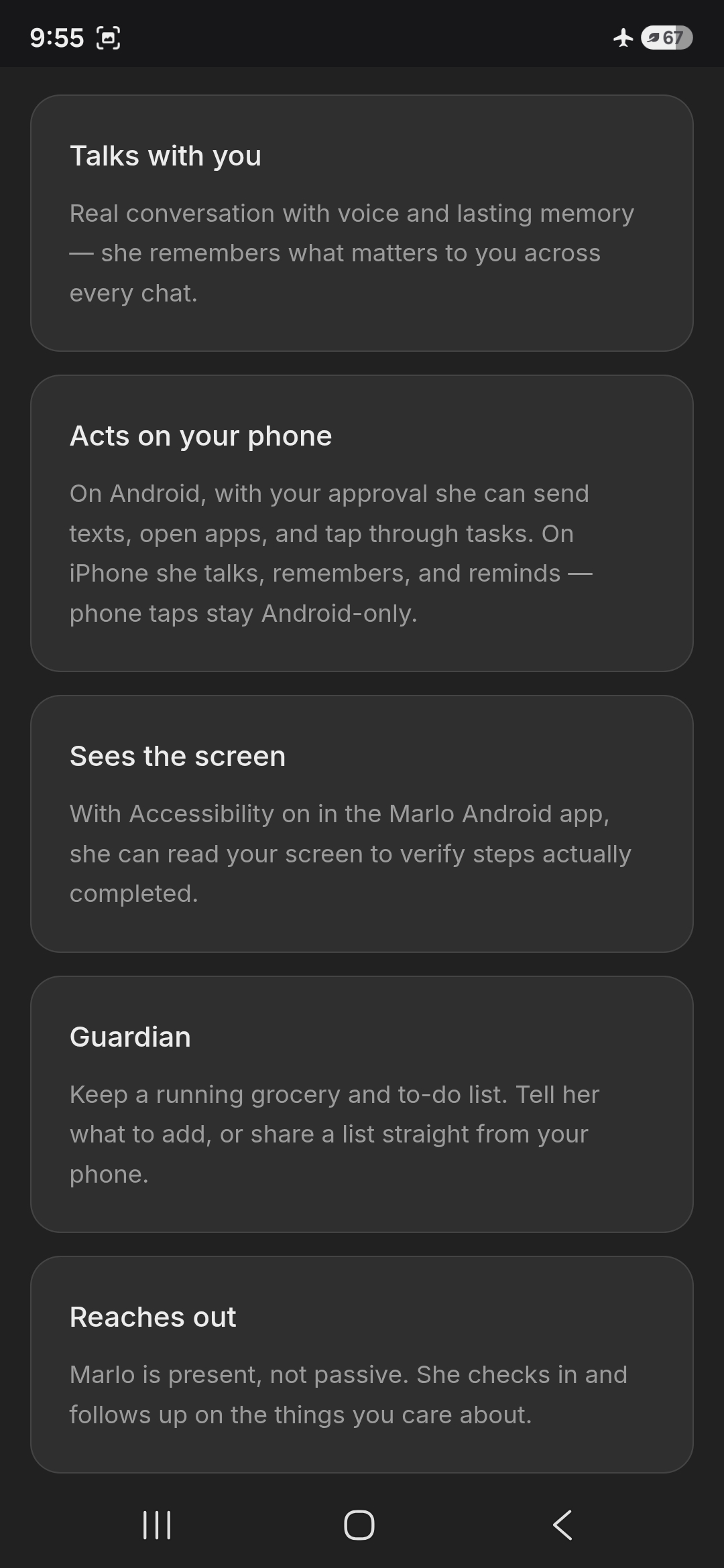
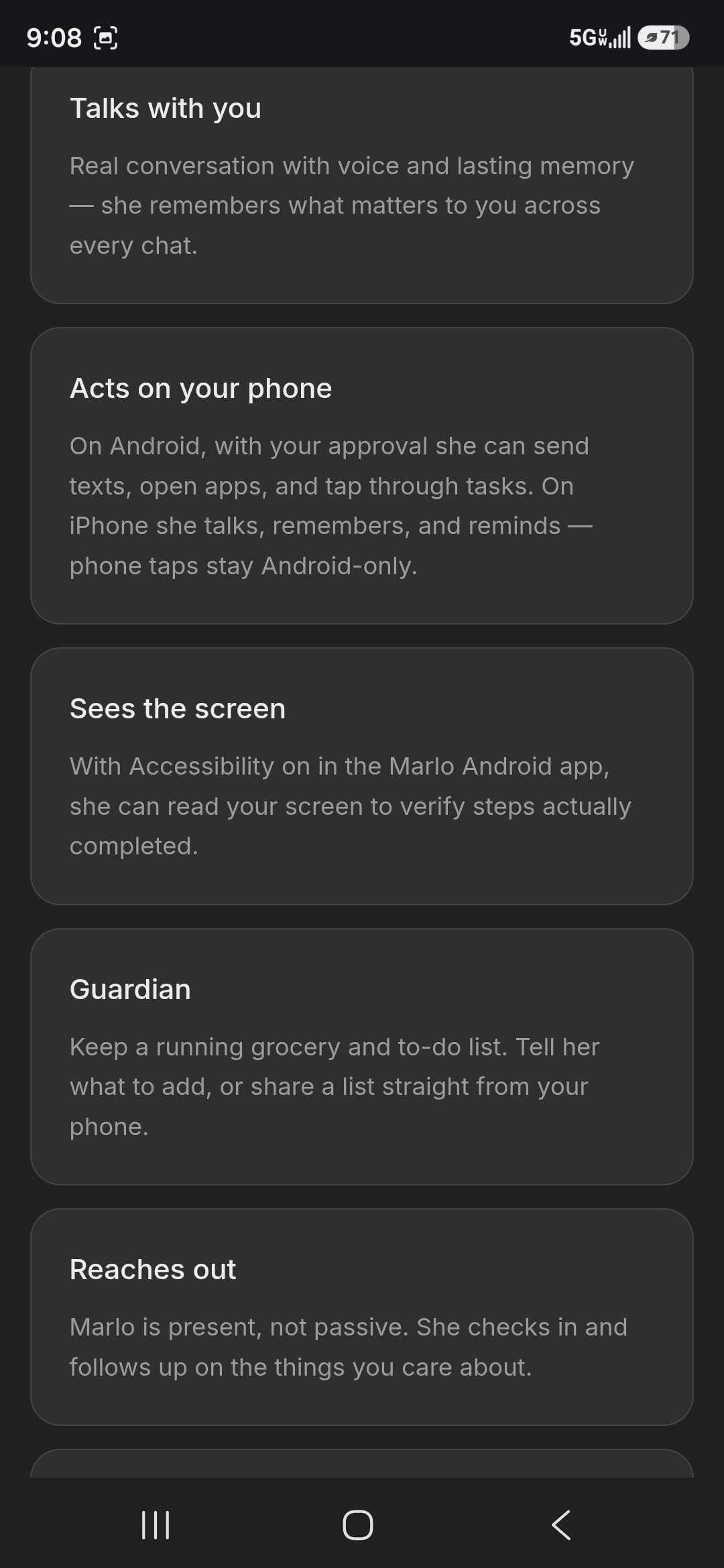
- Lasting memory: the app states it remembers what matters to the user across every chat
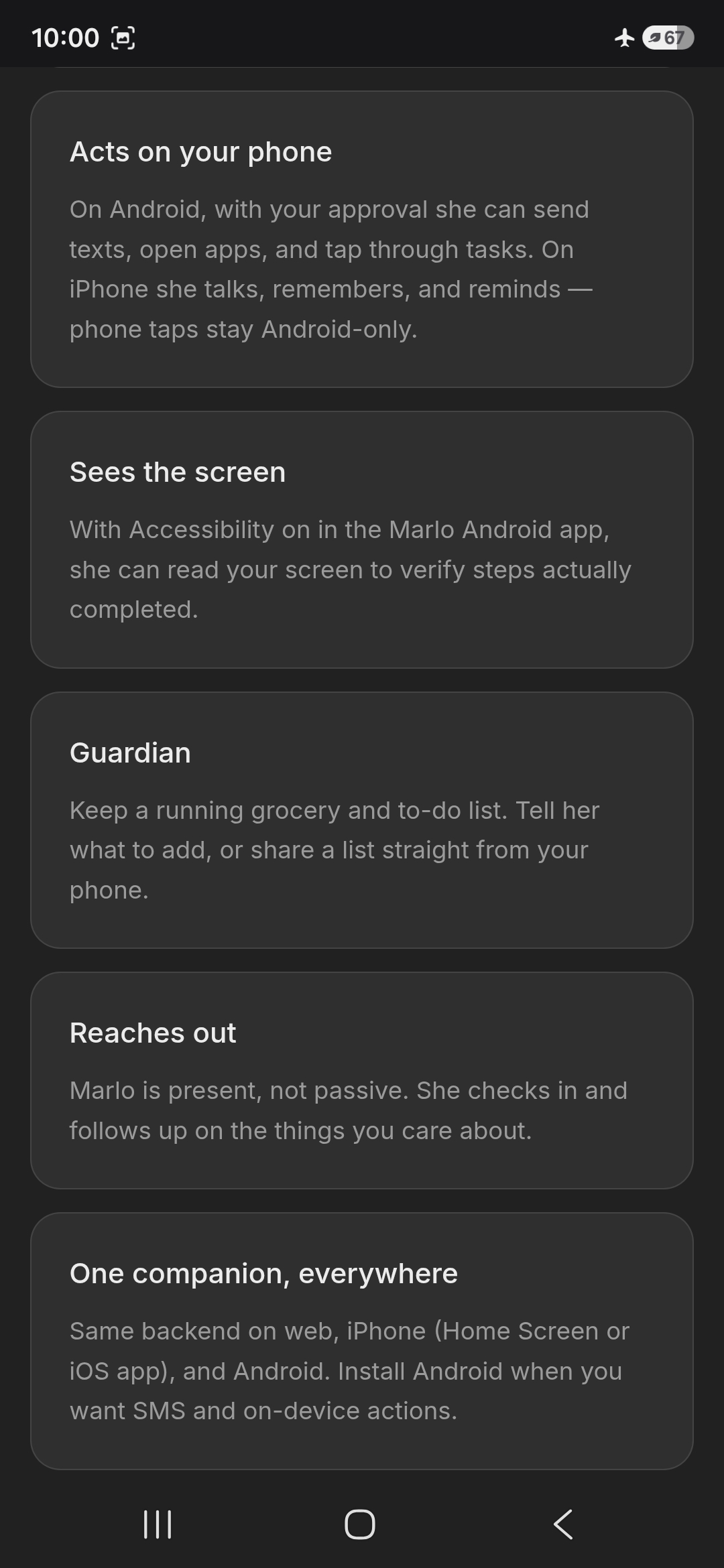
- Proactive check-ins ("Reaches out"): the assistant checks in and follows up on things the user cares about
Acting on the phone (Android)
- With the user's approval, the assistant can send texts, open apps and tap through tasks
- Sees the screen: with Android Accessibility enabled, it reads the screen to verify that steps actually completed
- The seller describes a passive UI overlay that works alongside other apps, plus use of the Android PackageInstaller Session API for app management and background execution
Lists and everyday tasks
- Guardian: a running grocery and to-do list the user can add to by voice or share straight from the phone
- The seller lists drafting emails, pulling local files, scheduling and smart macros / app-switching commands as target tasks
Cross-platform
- The app screens describe one backend shared across web, iPhone (Home Screen web app or iOS app) and Android
- On iPhone the assistant talks, remembers and reminds; on-device taps and SMS are Android-only
- The seller states the action engine can be exposed through a REST API so it can be driven from cloud or external platforms
Who it is for
- Android device makers (OEMs) who want a built-in voice-and-action assistant on custom hardware or skins
- Enterprise mobility teams looking for on-device automation for company phones and field staff
- AI and software holding companies wanting a mobile-agent codebase to build on rather than starting from zero
- Founders launching a consumer AI companion or phone-assistant app
How it works
- The user installs the app and talks to the assistant by voice or text.
- The assistant keeps memory of what matters to the user and maintains lists such as groceries and to-dos.
- On Android, the user grants Accessibility and approves actions; the assistant can then send texts, open apps and tap through tasks.
- It reads the screen to confirm each step completed, and checks in later to follow up.
- Optionally, the action engine is exposed through a REST API so other systems can trigger device tasks.
Ways to monetize
- OEM licensing: ship it as a white-label assistant on Android phones, tablets or smart displays
- Enterprise licensing of the mobile action engine to platforms needing device automation
- Consumer subscription for a premium AI assistant with phone control
- Device-management SaaS built on the REST layer for company phone fleets
Technology
TypeScript (web and desktop) · Kotlin + Android SDK (Android app, Accessibility, overlay) · Swift (iOS app) · REST API layer
What you get
- Source code for the web, Android, iOS and desktop builds, per the seller
- The Android agent engine, Accessibility / overlay integration and REST API layer
- Architecture maps, deployment guides and configuration documentation, per the seller
- Full IP transfer as an asset sale, and 30 days of seller support
Good to know
- Branding mismatch. Every app screenshot shows the product named Marlo, not Nima. Confirm with the seller which name and trademarks are included and whether this is the same product as any earlier Marlo listing.
- Privacy claims vs screens. The seller describes a local-first assistant with zero cloud data, but the app's own screens describe one shared backend across web, iPhone and Android. Ask where conversation memory is stored, which AI / speech models are used and whether they run on-device or through paid third-party APIs.
- Limited screenshots. The gallery shows only the feature-overview screens and a logo. Ask for a live demo of the agent completing tasks, the chat and voice UI, and the iOS and desktop builds.
- Pre-revenue. The seller describes it as pre-revenue. No user numbers or revenue are claimed.
- Platform policies. Apps that use Android Accessibility to control other apps face strict Google Play review, and iOS does not allow this kind of control. OEM preinstallation avoids some of that but needs its own agreements.
- Price. The asking price is $750,000, which is far above typical app source-code sales. Do proper technical due diligence (code review, a working build, IP ownership) before committing.
What's included
- Website
- Android
- Ios
- Desktop
Documentation
1. The user launches Nima on their Android device, initiating the background daemon process.
2. Nima actively tracks on-screen state changes and UI layout hierarchies locally and ephemerally.
3. The system maps device capabilities and handles secure application routing entirely client-side.
Autonomous Execution & System Hooks
1. When a task requires an action or setup update, Nima bypasses standard user intervention friction.
2. The agent utilizes the Android PackageInstaller Session API to manage background tasks securely.
3. A passive UI overlay interacts with apps behind the scenes, ensuring the active user experience is never interrupted.
Data Flow & Privacy Engineering
1. All contextual reasoning and decision-making happen locally within the device's sandbox.
2. Nima stores zero logs, histories, or profile data on public cloud backends like Supabase or Vercel.
3. The mobile action engine can optionally expose its capabilities to external local networks via safe REST APIs.
Support
Included: 30 days
Contact the publisher
Reviews
No reviews yet.