Live acquisition program sales@sellmycode.co
Mobile Apps › E-commerce & Marketplace

White Label Marketplace App Development

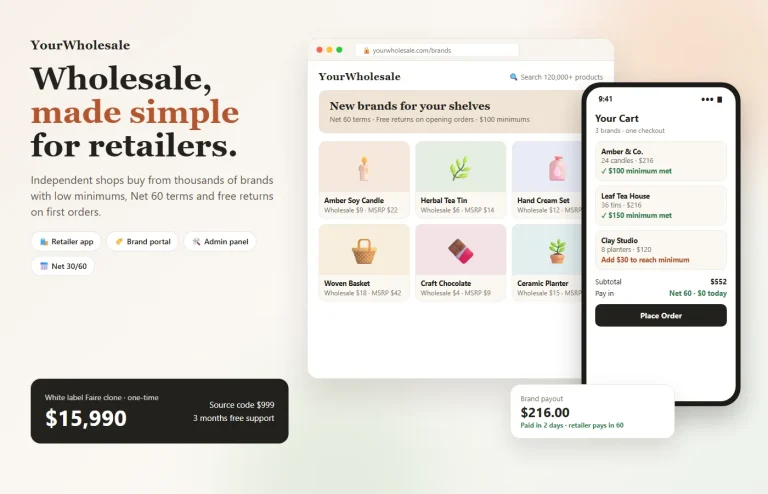
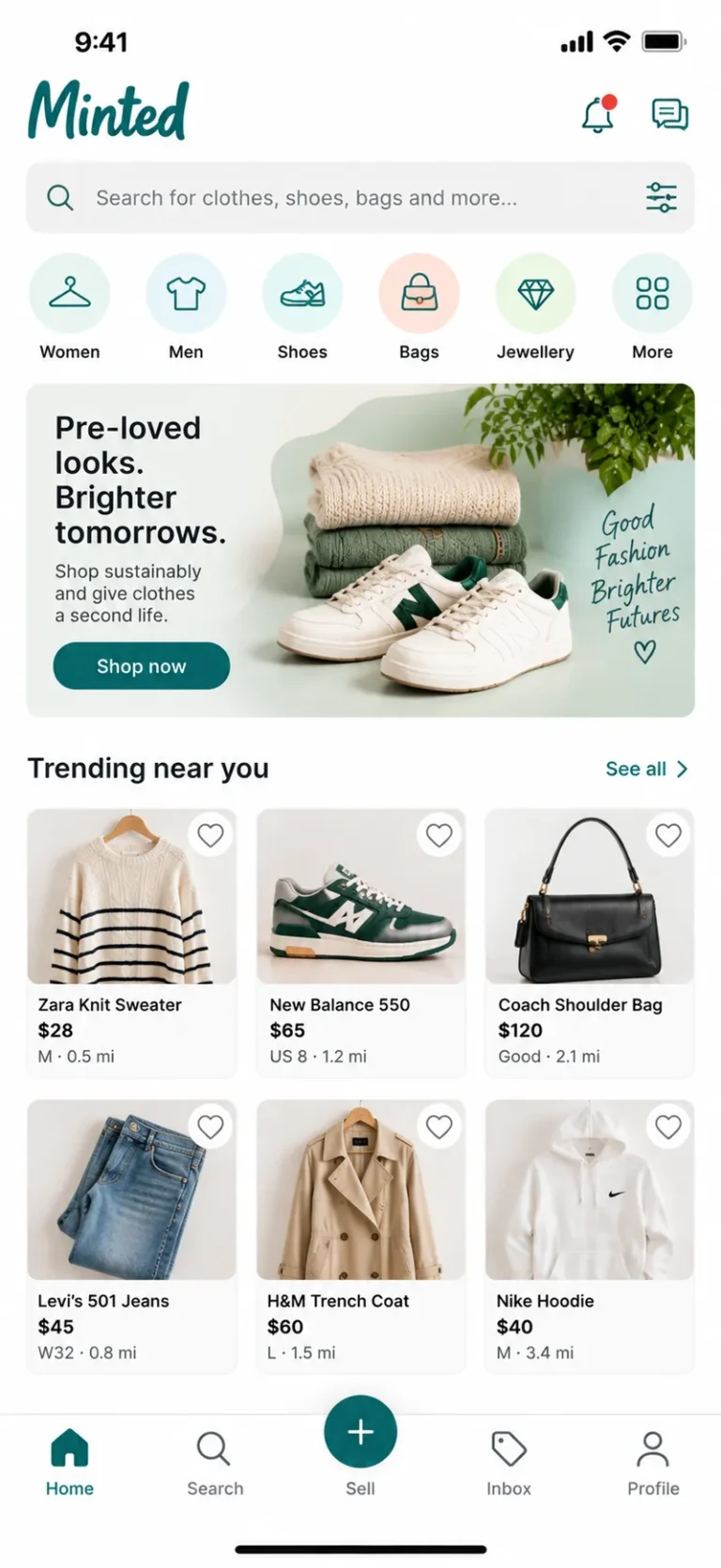
A marketplace app is a two-sided platform: independent sellers list their goods, buyers shop across all of them, and you take a commission on every trade — without ever holding stock yourself. Think Etsy, eBay or Amazon’s marketplace, rebuilt under your own brand.

Every build here ships as a white-label codebase with full source: seller onboarding, search and discovery, split checkout, ratings and reviews, messaging and a commission engine you control. Pick the shape that fits what you are selling, and launch in 14–30 days.

2Live listings
Code-reviewed listingsEvery product is vetted by our engineering team before it goes live.
Full source codeUnencrypted code handover — your servers, your accounts, no lock-in.
White-label licenceRebrand and launch under your own name on the App Store & Google Play.
Post-sale supportDocumentation, launch assistance, and a support window on every kit.
Free consultation

Didn't find the right app? Tell us what you want to launch.

Share your requirements and our engineering team will reply within 24 hours with a recommended platform, timeline, and a transparent fixed-bid quote — free, no pressure.

  • Response within 24 hours
  • Free demo & consultation call
  • Full source code on delivery
Why this category

Why buy a marketplace app

A marketplace is two businesses in one: getting sellers to list, and getting buyers to show up. When both sides tip, the thing becomes very hard to unseat — sellers stay because that's where the buyers are, buyers stay because that's where the choice is. That flywheel is the prize. The hard part was never the software; it's reaching liquidity, and that starts the day your app is live, not the day you finish building it.

$3.8T Sold through marketplaces a year, and rising
~67% of online spend now runs through them
$7,999 Starting price full source, your brand
14–30 days To soft launch written into the contract
The basics

What a marketplace app actually is

You don't own the stock and you're not the seller — you're the venue. Independent sellers list, buyers browse across all of them, and you take a cut of each sale for running the place and keeping it safe. That's the line between this and a plain store: a store sells its own goods, a marketplace rents out the shelf. Everything below exists to make strangers trust each other enough to transact.

🛍

Seller sign-up and listings

Self-serve onboarding, a listing flow that isn't painful, bulk upload for bigger sellers, and moderation so junk never reaches the storefront.

🔍

Search and discovery

Fast search, filters and categories, plus ranking you control. On a marketplace, who gets shown first quietly decides who makes money.

💳

Checkout across sellers

One cart, many sellers, one payment — then the money splits to each seller automatically with your commission held back.

Ratings, reviews and trust

Buyer and seller reviews, verified badges, report-and-block. Trust is the actual product; without it a marketplace is just a risky classifieds board.

💬

Messaging and disputes

In-app chat, order-linked so it's on the record, plus a dispute and refund flow. Optional escrow to hold funds until the buyer confirms.

The commission engine and admin

Set take-rates by category, run payouts, watch GMV, and step in when something goes wrong. The control room for the whole two-sided machine.

Building something the clones don't cover?

Services, rentals, B2B, a niche vertical — if the ready marketplace apps don't fit, our team builds one to your spec. Full source, your IP, a fixed quote in two days.

Talk to an engineer
Making money

How a marketplace earns

You make money when a trade happens between two other people. The trick is charging enough to be a business without charging so much that sellers route around you. Most marketplaces settle on a blend.

💵

Commission (take-rate)

5–20%

A cut of each completed sale. The main event. Too low and you don't have a business; too high and sellers take the buyer off-platform.

📝

Listing & seller plans

recurring

Per-listing fees or monthly seller subscriptions with better tools and limits. Predictable income that doesn't depend on any single sale.

🔥

Promoted placement

per click / CPM

Sellers pay to rank higher or get featured. Once you have buyer traffic, this is the highest-margin line you have.

💰

Payments & add-ons

variable

Payment margin, shipping, insurance, buyer protection fees. Small per order, real at volume, and mostly invisible to the seller.

Choosing one

How to pick the right marketplace clone

The plumbing is similar everywhere. What actually differs is the kind of trade you're hosting — and that changes the whole app.

📦

Goods, services or rentals?

Physical goods need shipping and returns. Services need scheduling and quotes. Rentals need calendars and deposits. Buy the clone built for what's changing hands.

🎯

Broad or niche?

A general marketplace fights giants on every front. A niche one — one category, one region, one community — can win because it's specific. Niche is usually the smarter first move.

🛡

How much do you police?

Open sign-up scales fast but invites fraud. Vetted sellers build trust but slow you down. Pick the moderation posture that fits your category's risk.

Build vs buy

White label marketplace app cost

A two-sided platform built from scratch is a 10-to-16-month job and deep into six figures — payments, payouts, trust and moderation are each a project on their own. A white-label clone hands you all of it, live in weeks.

From scratch $140k – $550k 10–16 months, a full engineering team
  • Native iOS and Android, roughly $30k each
  • Split payments and payouts, $35k–$80k
  • Search, ranking and discovery, $25k–$60k
  • Reviews, trust and dispute handling, $25k–$50k
  • The real risk isn't code — it's launching with no sellers or no buyers
The timeline

From payment to your first trade

The 14–30 day window is a clause, not a slogan. If we miss it by more than a couple of days and it's on us, the refund term kicks in.

Day 0–1

Kickoff

Payment clears, we meet, the engineer assigned to you gets the repo ready and hands over access.

Day 2–7

Your brand on it

Source transferred, hosting set up, your logo, colours and type applied across both apps and the web storefront.

Day 8–15

Payments and payouts

Split-payment gateway connected, commission rules set, categories built, and your first pilot sellers invited in.

Day 16–22

Testing and store review

Both apps submitted to Apple and Google. A full trade tested end to end: list, buy, split payout, review, refund.

Day 23–30

Open for trade

Seed sellers live with real listings, first buyers invited, monitoring on, apps clearing store approval.

Learn from others

Mistakes that sink marketplaces

Marketplaces don't usually fail on features. They fail on liquidity and trust. These are the patterns we see most.

Chasing both sides at once

Empty-shelf, empty-street. Solve one side first — usually seed the supply, or fake it with your own inventory — so early buyers actually find something.

Ignoring leakage

Once two people meet, they'll try to deal off-platform to dodge your cut. Keep payments, chat and protection on-platform so staying is easier than leaving.

Trust as an afterthought

One scam story spreads faster than a hundred good trades. Reviews, verification and a real dispute process aren't optional — they're the whole business.

Setting the take-rate blind

Too high and sellers leave; too low and you can't grow. Start where your category's incumbents sit, then adjust with data, not hope.

Going broad and thin

A little of everything beats no one. Win one category or one city with real depth before you widen out.

Who buys this

Who a marketplace app is for

The app is the easy part. Whether it works comes down to who's running it and how they solve the cold-start.

🌱

Community founders

You already have an audience — a niche, a region, a following — and want to turn it into a place where they buy and sell from each other.

🏢

Category specialists

You know one vertical inside out and can vet sellers and set rules better than any generalist giant bothers to.

🤝

Agencies and resellers

You build for clients and want a marketplace platform you can rebrand per client instead of quoting a ground-up build each time.

💼

Operators with supply

You've got sellers, dealers or partners already, and you want to put them all in one branded app buyers can shop across.

Ready to launch your marketplace?

Pick the clone that matches the kind of trade you're hosting from the listings above, or tell us your niche and we'll quote a custom build.

Frequently asked questions

What is the difference between a marketplace app and an online store?

A store sells its own products; a marketplace hosts many independent sellers and takes a commission on each sale. If other people will be doing the selling, you want a marketplace.

How does a marketplace make money?

Mainly a commission (take-rate) on each sale, plus optional listing fees, seller subscriptions and promoted placements once you have buyer traffic.

What is included?

Full source for iOS, Android and web: seller onboarding, listings, search and discovery, split checkout, automated payouts, reviews, messaging, disputes and the admin.

How do payments work with many sellers?

One buyer payment is split automatically across the sellers in the cart, your commission held back, and paid out to each seller’s account on a schedule.

How fast can I launch?

14 to 30 days to soft launch, including branding, payment setup and app-store submission.

Can I customise the commission and rules?

Yes. You get the source, so take-rates, categories, ranking and moderation are all yours to tune.