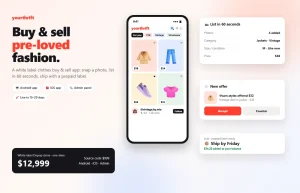
The Fee Inversion That Built a €5B Marketplace
Every other marketplace charges sellers. eBay charges sellers a listing fee plus a final value fee. Etsy charges sellers $0.20 per listing plus a transaction fee. Amazon Marketplace charges sellers per category plus a referral fee. Mercari charges sellers a 10% selling fee.
Vinted does the opposite. Sellers list for free. They pay nothing to post items, nothing on sale, nothing when payment clears. The platform makes its money from a small “Buyer Protection Fee” that buyers pay on every purchase (typically 3-8% plus a small flat fee).
This single design decision — inverting which side of the transaction pays — is why Vinted grew from a Lithuanian closet-sale app in 2008 to a €5B-valued marketplace dominating France, Germany, UK, Poland, Spain, Italy, Netherlands, Belgium, and now expanding into the US and Canada. Sellers list 10x more items when listing is free. More inventory means more selection. More selection means more buyers. More buyers mean more sellers list. The flywheel only works because sellers face zero friction.
This Vinted Clone App Development is built around that fee inversion and the four other design decisions that compound on top of it. Read the rest of the page to understand what those decisions are and how the platform delivers each.
Pricing & Deliverables
- White Label Vinted Clone — $9,500
- Free server deployment on your cloud infrastructure (AWS / GCP / Azure / Hetzner / OVH)
- 3 months free post-launch support
- Delivery in 15 days from brand assets received
- Demo before payment — review a working instance before you wire anything
Design Decision #1: Sellers Pay Nothing To List
The mechanic seems simple. The implementation isn’t. When listing is truly free, you face a torrent of low-quality inventory: blurry photos, missing descriptions, duplicate listings, items the seller has no intention of actually shipping. eBay charges listing fees partly to keep junk out of the catalog. Vinted has to keep junk out without that friction.
The platform ships the infrastructure that makes free listing actually work:
- AI-assisted listing creation
- Seller uploads a photo. AI identifies the item category, suggests brand, estimates size, recommends a price based on comparable sold items, generates a description draft. Three minutes from photo to live listing. Sellers list 5x more items when the friction drops this low.
- Image quality enforcement
- Pre-publication image analysis flags blurry photos, photos with watermarks, photos of multiple unrelated items, photos that are obviously stock images, photos taken in poor lighting. Sellers get guidance to retake before publishing. The catalog quality improves without manual review at scale.
- Duplicate listing detection
- Image similarity hashing catches sellers who try to list the same item twice in different categories. AI text similarity catches sellers who copy-paste descriptions across multiple listings of supposedly different items.
- Seller intent verification
- First-time sellers must verify their identity before their first listing reaches the public catalog. Verified sellers can list immediately. Sellers with a history of accepting offers but not shipping get throttled.
- Listing quality score
- Each listing gets a quality score (photo quality + description completeness + appropriate pricing). Higher-quality listings rank higher in search and discovery. Sellers learn to write better listings without manual coaching.
Design Decision #2: Buyer Protection Fee + Authentic Money-Back Guarantee
Buyers pay a small fee on top of the item price. In exchange, they get a guarantee: if the item doesn’t match the listing, doesn’t ship, arrives damaged, or is fake — Vinted refunds the buyer’s full purchase (item + shipping) and recovers the funds from the seller through dispute resolution.
This is the single highest-leverage trust mechanism in C2C marketplaces. Buyers buy more when they’re protected. Sellers don’t feel the fee because they don’t pay it. The platform makes its money. Three-way win.
The platform ships:
- Configurable Buyer Protection Fee — set the percentage (typical 3-8%) and flat-fee component (typical $0.30-$1.20). Different rates per region. Different rates per item-price tier (cheaper items often have higher percentage but smaller flat fee).
- Escrow payment flow — buyer pays at purchase; funds held in escrow until buyer confirms receipt (or auto-released after delivery + 48 hours if no dispute).
- Dispute resolution workflow — buyer reports issue, seller responds, platform mediates. Built-in evidence collection (photos, conversation history, shipping tracking).
- Automatic refund processing — disputes resolved in buyer’s favor auto-refund the full purchase amount and debit seller’s pending balance.
- Seller protection on legitimate sellers — repeat-buyer-dispute patterns flagged, automatic seller side defense when buyer abuse is detected.
- AI authentication for luxury items — items priced above a configurable threshold (typical $200+) get optional authentication by AI image analysis + optional human expert review. Authenticated items get a verified badge that increases conversion 3-5x.
Design Decision #3: Pre-Paid Shipping Labels Integrated
The friction killer most marketplaces miss. eBay and Mercari sellers manually purchase shipping labels through clunky integrations. Buyers wonder when their item will arrive. Sellers procrastinate shipping because the process is annoying.
Vinted bakes shipping into the purchase flow. The buyer’s payment includes the shipping cost. The seller receives a pre-paid label via email or app notification. They print, attach, drop at any partner location. Tracking updates flow back into the platform automatically.
The clone ships integration with the carriers that actually matter in your launch markets:
- Europe: DHL, DPD, GLS, Mondial Relay, La Poste, InPost (Poland), Bring (Nordics)
- UK: Royal Mail, Evri (formerly Hermes), DPD UK, Yodel
- USA: USPS, UPS, FedEx, ShipStation aggregator integration
- Canada: Canada Post, Purolator
- Other: EasyPost API for global aggregation, Shippo for international
Pre-paid label rates are negotiated with carriers (your account, your discount tiers) and passed through to buyers at purchase time. The platform marks up shipping by a configurable percentage (typical 5-15%) as an additional revenue line item beyond the Buyer Protection Fee.
Design Decision #4: Bundle Discounts (The Closet Sale Mechanic)
A buyer browsing one seller’s closet finds three items they like. On eBay, they’d buy each separately and pay shipping three times. On Vinted, the seller has pre-configured a Bundle Discount — buy 2+ items, pay one shipping fee plus a configurable item discount (typical 10-15% off the bundle).
This mechanic does three things simultaneously: increases average order value (operators see 30-50% AOV lift among buyers who use bundles), reduces shipping cost per item (better margins for sellers and platform), and increases buyer loyalty (the bundle experience builds the “I should check this seller’s closet first” habit).
The clone ships bundle infrastructure:
- Per-seller bundle discount configuration (sellers set their own bundle rules within operator-defined limits)
- Single-checkout flow for multi-item bundle purchases
- Combined shipping with packaging recommendations
- Bundle-specific dispute resolution (partial refunds for individual items in a bundle)
- Bundle analytics — which sellers get the most bundle sales, which item categories bundle best, what discount percentages convert best
Design Decision #5: Closet Pages + Member Trust Infrastructure
Every seller has a public closet page — their profile, all their items, their reviews, their response rate, their typical shipping time. Buyers browse closets the way they’d browse a friend’s wardrobe. Sellers who treat their closet like a brand build follower bases. The infrastructure ships with:
- Closet customization
- Profile photo, cover image, bio, social links, default shipping policies, default return policies, accepted payment methods, currency preference.
- Member reviews + response rate + average shipping time
- Surfaced on every closet page and listing card. Real-time stats so buyers can assess trust before purchase.
- Heart / like / save mechanics
- Buyers heart items they like (signals interest to seller, who can offer discounts to interested buyers). Buyers save sellers to follow new listings. The “social commerce” layer Vinted built before “social commerce” was a buzzword.
- Make-an-offer mechanic
- Buyer offers below listing price. Seller accepts, counters, or rejects. Platform takes Buyer Protection Fee on agreed price. The negotiation infrastructure that turns browsers into buyers.
- Direct messaging
- Buyer-seller chat with auto-translation for cross-language transactions, photo/video sharing, response time tracking, AI moderation for safety and policy violations.
- Follower system + activity feed
- Followers see new listings from sellers they follow. Sellers can broadcast updates (“flash sale this weekend”) to their followers via notification.
- Verified Seller badges
- Sellers who complete extended KYC, maintain high ratings, and meet activity thresholds get a verified badge that lifts their listing visibility and buyer conversion 2-3x.
The Platform Architecture
Mobile + Web
- Native iOS app (React Native) submitted to App Store under Shopping category
- Native Android app (React Native) submitted to Play Store under Shopping
- Progressive Web App (PWA) installable to home screen
- Responsive web app for desktop browsers (important for sellers managing large closets)
Seller Tools
- AI-assisted listing creation (photo → category + brand + size + price suggestion + description draft)
- Bulk listing creation for sellers moving inventory at scale
- Multi-photo listings (up to 10 photos per item)
- Video listings (15-second clips for sellers showing fit / condition)
- Closet management dashboard (active listings, sold items, drafts, archived)
- Sales analytics (top-selling categories, average sale price, repeat-buyer rate, view-to-sale conversion)
- Bundle discount configuration
- Auto-relist for items that don’t sell within configurable timeframe
- Item promotion (paid feature for boosted listing visibility — secondary revenue rail)
Buyer Tools
- Category browse (Women’s, Men’s, Kids, Vintage, Home, plus operator-defined categories)
- Filter by brand, size, condition, color, price range, location, member rating
- Saved searches with new-listing alerts
- Heart / save items for later
- Follow sellers
- Recommendation feed based on saved items + recent searches + closet follows
- Make-an-offer flow
- Bundle builder (add multiple items from same seller, see bundle discount, single checkout)
- Buyer Protection education in checkout flow (visible explanation of what they’re paying for)
- Order tracking with carrier integration
Payment + Shipping Infrastructure
- Stripe primary for card payments + Stripe Connect for seller payouts
- Apple Pay + Google Pay integration
- PayPal as secondary payment rail
- Regional adapters: Klarna (Europe), iDEAL (Netherlands), Bancontact (Belgium), Sofort (Germany), Razorpay (India), PIX (Brazil)
- Pre-paid shipping label integration: DHL, DPD, GLS, Mondial Relay, La Poste, InPost, Royal Mail, Evri, USPS, UPS, FedEx, Canada Post, Purolator (carrier list configurable per market)
- EasyPost / Shippo for international shipping aggregation
- Escrow payment flow with auto-release after delivery confirmation
- Vinted Wallet equivalent — internal balance system for sellers (sales credit) and buyers (refunds) before withdrawal
- Withdrawal workflow with KYC + tax form vault
Trust + Safety
- AI authentication for luxury items (handbags, watches, designer apparel above configurable price threshold)
- Optional human expert review queue for high-value authentication
- Counterfeit detection ML models trained on brand-specific authenticity markers
- Dispute resolution workflow with built-in evidence collection
- Block / report user system with auto-flagging of repeat offenders
- AI content moderation on photos (prohibited items: weapons, drugs, fake luxury, NSFW, copyrighted IP)
- Direct message moderation (off-platform transaction attempts, harassment, scam patterns)
- Three-strike system for policy violations with appeal workflow
Master Panel — What You Control
Revenue Configuration
- Buyer Protection Fee configuration (percentage + flat fee, per region, per item-price tier)
- Shipping markup configuration (percentage added to carrier rates)
- Item promotion pricing (boosted listing fees, per category, per duration)
- Authentication service pricing (per-item fee, AI-only tier vs human expert tier)
- Premium membership tier configuration (Vinted Plus equivalent — operator-defined perks)
Catalog + Trust Operations
- Pending listing review queue (AI-flagged listings for human review)
- Pending authentication queue (luxury items awaiting expert review)
- Dispute resolution queue with full conversation + evidence history
- Reported user queue with violation context
- Brand catalog management (which brands are recognized, which are restricted, which require authentication)
- Category structure management (top categories, sub-categories, attribute schemas per category)
- Geo-restriction controls (per-region category visibility, prohibited item lists per market)
User + Seller Management
- User search with full profile, transaction history, dispute history
- Seller approval workflow (extended KYC for verified seller badge)
- Withdrawal approval queue with tax form vault (W-9, W-8BEN, EU VAT, regional)
- Automated 1099 generation for US sellers + EU VAT MOSS reporting
- Suspension / ban / appeal workflow with audit trail
- Bulk operations for catalog quality (re-run image quality checks across category)
Analytics + Growth
- Real-time GMV dashboard with revenue breakdown (Protection Fees + shipping markup + promotion fees + authentication fees + premium subscriptions)
- Cohort retention by acquisition channel + region + first-purchased category
- Top seller leaderboard (by revenue, by item count, by sell-through rate)
- Buyer cohort analysis (single-purchase vs repeat-buyer ratio, AOV trends)
- Conversion funnel (install → signup → first-search → first-heart → first-purchase → repeat-purchase)
- Category performance (which categories drive volume, which drive margin)
- Bundle adoption analytics
- Dispute rate monitoring (early warning for moderation policy gaps)
Marketing
- Push notification engine with audience segmentation (new sellers, lapsed buyers, top spenders, by category preference)
- Saved-search alerts (auto-notify buyers when matching items list)
- “You may also like” recommendations
- Email digest campaigns (weekly trending items, follower listing updates)
- Referral program with credit for both referrer and referee on first purchase
- Retargeting integrations (Meta, TikTok, Google Ads)
- Attribution SDK (AppsFlyer or Adjust)
The Tech Stack
- Frontend: React Native (iOS + Android one codebase), Next.js (web + PWA), Tailwind, Framer Motion
- Backend: Node.js + NestJS, Socket.io for real-time chat + notifications, Redis for cache + session, PostgreSQL primary, ClickHouse for analytics
- Search: Elasticsearch or Meilisearch for catalog search with brand + size + condition + color filters at sub-100ms latency at scale
- Image processing: Sharp + custom ML pipeline. AI models for category classification, brand detection, condition assessment, authenticity verification on luxury items
- Storage + CDN: S3 + Cloudflare R2 for images, BunnyCDN for delivery, image optimization on the fly
- Payments: Stripe Connect for marketplace payments, Apple Pay + Google Pay, PayPal, regional adapters
- Shipping: EasyPost + Shippo aggregators + direct carrier APIs for major markets
- Containerization: Docker + Kubernetes optional, one-command deploy to AWS / GCP / Azure / Hetzner / OVH
- Observability: Sentry, OpenTelemetry, Grafana + Loki
The Six Revenue Rails
Unlike marketplaces that charge sellers, Vinted-style platforms make money from six rails simultaneously:
- Buyer Protection Fee — primary revenue (typically 50-60% of total platform GMV). Configurable percentage + flat fee per region.
- Shipping markup — secondary revenue (typically 10-20% of GMV). Configurable percentage added to carrier rates.
- Item promotion / boosted listings — sellers pay to have their items featured in category feeds or search results. Per-category pricing.
- Authentication service — buyers (or sellers) pay per-item fee for AI-only or human expert authentication of luxury items.
- Premium membership tier — Vinted Plus equivalent. Monthly subscription with perks like reduced Buyer Protection Fee on purchases, priority customer service, advanced seller analytics.
- Buyer Wallet float — interest earned on funds held in escrow and wallet balances. At scale this becomes meaningful revenue.
Markets Where Vinted-Style Clones Are Winning Right Now
Vinted dominates Western Europe but the model works in many under-served markets:
Western European tier-2 markets
Vinted is strong in France, Germany, UK, but operators with niche positioning (Vinted-for-luxury, Vinted-for-streetwear, Vinted-for-kids) can carve share. Smaller Vinted-like markets (Netherlands, Belgium, Italy, Spain) have more competition than they did 5 years ago.
Eastern European markets
Poland, Czechia, Hungary, Romania, Lithuania, Estonia — Vinted has presence but local competitors with regional payment processors (BLIK in Poland, MultiBanco in Portugal) and regional shipping carriers can outperform.
India + South Asia
Massive untapped market. Razorpay + UPI + Paytm payment integration unlocks consumer adoption. Hindi / Tamil / Bengali / Urdu localization required. Saree resale, ethnic wear resale, kids’ clothing resale are underserved categories with strong demand.
Brazil + LATAM
PIX integration is the single most important localization decision. Vinted-style fee inversion is novel in markets dominated by Mercado Libre’s seller-pays model.
Middle East + North Africa
Arabic + RTL localization required. Modest fashion vertical (hijabs, abayas, modest dresses) is severely underserved by global platforms. Cash-on-delivery integration matters in markets where card adoption is lower.
Southeast Asia
Indonesia, Philippines, Vietnam, Thailand. Local payment processors (Dana, GoPay, OVO, GrabPay) plus regional shipping (J&T Express, JNE, NinjaVan) required. Pre-loved fashion is a growing category as second-hand becomes culturally accepted.
Africa
Nigeria, Kenya, South Africa, Egypt. Mobile money integration (M-Pesa, Flutterwave) critical. Mitumba (used clothing) market is enormous and largely offline — digital platforms in this space are early-stage but growing fast.
Delivery Timeline (15 Days)
- Days 1-2: Brand assets handover, cloud infrastructure provisioned, payment processor accounts initiated for your launch market.
- Days 3-5: Branding applied across mobile apps + web + Master Panel. Domain wired with SSL. Stripe Connect configured. Regional payment processors wired.
- Days 6-9: Shipping carrier integrations wired for your launch markets (DHL/DPD/GLS for Europe, USPS/UPS/FedEx for US, etc.). AI category + brand + price suggestion models initialized. Authentication ML pipeline configured.
- Days 10-12: Internal QA on your live instance — seller signup, listing creation, buyer purchase flow with Buyer Protection Fee, shipping label generation, dispute resolution flow, seller withdrawal.
- Days 13-15: Handover. Master Panel credentials. Documentation walkthrough. App Store + Play Store submissions filed.
3 Months Of Free Support — What’s Covered
Included: defect fixes against shipped features, security patches + CVE response, dependency updates, payment processor SDK updates (Stripe, regional), shipping carrier API updates, AI model retraining for your catalog’s top categories, minor feature requests within existing architecture, email + chat support during business hours.
Not included: major new feature development (scoped separately), full UI redesigns, additional market expansion beyond launch markets (~3-7 days per new market), custom content moderation policy work, integration of carriers or payment processors not on the standard list.
After 3 months, monthly retainer support available (typical $800-$1,500/month at modest scale).
Demo Before Payment
Standard risk-reversal across our marketplace clones. Fill out the lead form. Within 24 hours we provision a private demo instance with sample sellers and listings, sample buyers with wallet balances, sample transactions in various states (active, shipped, disputed, refunded), and Master Panel credentials. You sign up as a seller, create a listing with AI assistance, switch to a buyer account, browse the catalog, make an offer, complete a purchase, generate a shipping label, raise a dispute. End-to-end before payment.
Costs Outside The $9,500
- Cloud infrastructure — pass-through to your account. Plan $200-$600/month at launch.
- CDN delivery — pass-through. Image-heavy catalogs scale CDN costs faster than text-heavy platforms.
- AI/ML provider costs — pass-through. Image classification, brand detection, authentication ML. Typical $150-$500/month at modest scale.
- Apple Developer ($99/year) + Google Play Developer ($25 one-time)
- Stripe Connect fees — standard 2.9% + $0.30 per transaction, plus 0.25% + $0.25 per Connect payout to sellers
- Shipping carrier accounts — your business accounts with negotiated rates. Better volume = better rates over time.
- Marketing budget — your decision, but plan meaningfully for paid acquisition + seller-acquisition + initial inventory seeding (sometimes paying creators to list early inventory).
- Content moderation team — AI handles most flags but you need humans at scale.
- Customer support team — dispute resolution and trust issues require human responsiveness.
What This Clone Isn’t For
- B2C marketplaces — if your model is wholesale-to-consumer or single-merchant-to-many-buyers, you want a Shopify clone, not a Vinted clone.
- New-goods marketplaces competing with Amazon — the fee inversion only works when listings are abundant and sellers are individuals. New-goods markets typically need different mechanics.
- Auction-style platforms — Vinted is fixed-price + make-an-offer. If you want eBay-style timed auctions, the platform supports it as an extension but it’s not the default mechanic.
- Markets without reasonable shipping infrastructure — if your launch market lacks reliable courier networks, P2P marketplaces struggle regardless of platform quality.
Frequently Asked
Q: Why does Vinted’s fee model actually work? What happens if I copy it?
A: The fee model works because of the flywheel: free listing → more inventory → more selection → more buyers → more sellers list. If you launch with the fee model but only 1,000 listings, the flywheel doesn’t spin and the model doesn’t generate revenue. The first 6 months of operation typically require active seller-acquisition investment (paid creator partnerships, social campaigns targeting fashion-conscious users) to seed enough inventory that organic discovery starts working. Operators who skip this step launch and wonder why GMV is flat.
Q: How is your Vinted Clone App Development different from white label marketplace scripts on Codester?
A: The cheap scripts ship the catalog + checkout but skip every Vinted-specific mechanic. No AI-assisted listing creation. No Buyer Protection Fee escrow infrastructure. No integrated shipping carrier APIs. No bundle discount mechanics. No closet pages with follower system. No authentication ML pipeline. No dispute resolution workflow. You can spend $500 and 3 months trying to build these on top of a generic marketplace script, or $9,500 here and ship a real Vinted-equivalent in 15 days. The features that make Vinted Vinted are not optional add-ons — they’re the product.
Q: How does the Buyer Protection Fee actually work in the escrow flow?
A: Buyer pays at checkout (item price + Buyer Protection Fee + shipping). Funds held in Stripe Connect escrow. Seller receives notification + pre-paid shipping label, ships within configurable timeframe (default 5 business days). Carrier tracking integration auto-updates order status. After buyer confirms receipt (or auto-release after delivery + 48 hours), funds release to seller’s pending balance minus shipping cost and any applicable fees. If buyer disputes, funds remain in escrow until resolution. Auto-refund if buyer wins dispute; release to seller if seller wins.
Q: What carriers are actually integrated for shipping?
A: Europe: DHL, DPD, GLS, Mondial Relay, La Poste, InPost, Bring. UK: Royal Mail, Evri, DPD UK, Yodel. USA: USPS, UPS, FedEx, plus ShipStation aggregator. Canada: Canada Post, Purolator. Global: EasyPost API for aggregation, Shippo for international. Custom carrier integration for your launch market is in scope at the $9,500 tier if the carrier has a documented API. Markets without API-accessible carriers can run manual label upload as a fallback (less ideal but supported).
Q: How does the AI-assisted listing creation actually work?
A: Seller uploads photo(s). Computer vision model identifies category (dress / shirt / shoes / handbag / etc.). Brand detection model identifies visible logos or brand-specific design elements. Size estimation via image scale + EXIF data. Comparable sold-item price suggestion via internal catalog history + external comp data (where available). Description draft generated based on detected attributes. Seller reviews and edits. Three minutes from photo to live listing instead of 15 minutes manually. ML models retrained periodically on your catalog’s top categories.
Q: How accurate is the AI authentication for luxury items?
A: For high-volume brands (Louis Vuitton, Gucci, Chanel, Hermès, Rolex, Omega, Nike, Air Jordan), AI-only authentication accuracy is 92-97% with appropriate training data. For lower-volume brands, accuracy drops. The recommended pattern: AI-only authentication for items under $500, AI + human expert review for items $500-$5,000, mandatory human expert for items above $5,000. Operators can adjust thresholds per category and per market. Authentication errors are covered by the Buyer Protection Fee guarantee — if an authenticated item turns out to be counterfeit, buyer is refunded and platform absorbs the cost.
Q: How does the make-an-offer mechanic generate revenue?
A: Buyer offers a price below listing. Seller accepts, counters, or rejects. Platform takes Buyer Protection Fee on the agreed price (not the listing price). Operators see roughly 30-40% of transactions go through the offer flow at maturity, with average agreed prices 12-18% below original listing. Net effect on platform GMV is positive because the offer mechanic converts hesitant buyers who would otherwise abandon. Operators who disable the offer mechanic see lower overall GMV.
Q: Will my Vinted clone get approved by App Store and Google Play?
A: For P2P marketplaces with active content moderation, yes. Vinted itself is in both stores and approved routinely. Risk areas: counterfeit items reaching the marketplace get the app pulled (the AI authentication infrastructure + reporting flow addresses this), inappropriate items in fashion categories (the prohibited item list + AI photo moderation addresses this), off-platform transaction attempts (the DM moderation addresses this). With active moderation and proper trust infrastructure, store standing is maintained.
Q: How does the platform handle returns and disputes?
A: Returns are handled per the seller’s configured return policy (no returns, 7-day, 14-day, 30-day — operator can set policy floors). For disputes during the protection window, the platform mediates: buyer reports issue with evidence (photos, conversation history), seller responds with their evidence, platform reviewer (your team or our outsourced moderation tier) decides. Resolution options: full refund, partial refund, no refund, replacement (if seller has duplicate). Dispute resolution is the highest-skill operational role on a Vinted-style platform — invest in good moderators.
Q: How does the white label Vinted clone handle multi-currency markets?
A: Per-region currency configuration in Master Panel. Sellers can list in their local currency; buyers see prices in their local currency (converted at configurable margin). Stripe handles multi-currency settlement. Cross-border purchases work with appropriate shipping cost adjustments. Operators in markets with high inflation often configure shorter listing duration (sellers re-list at adjusted prices weekly) to manage currency volatility.
Q: Can I monetize beyond the Buyer Protection Fee?
A: Yes. Six rails: (1) Buyer Protection Fee (primary), (2) Shipping markup, (3) Boosted listings (sellers pay for visibility), (4) Authentication service fees, (5) Premium subscription tier (Vinted Plus equivalent), (6) Wallet float (interest on escrow + wallet balances at scale). At maturity, operators see roughly 50-60% revenue from Buyer Protection, 10-15% from shipping markup, 8-12% from boosted listings, 5-10% from authentication, 8-15% from premium subscriptions, 2-5% from float.
Q: Why is this priced at $9,500 instead of $8,999 like your other recent clones?
A: Different feature complexity. Vinted-style P2P marketplaces have lower real-time infrastructure requirements than live streaming clones (no WebRTC, no continuous video, no real-time audio mixing). The core complexity is in the AI-assisted listing creation, authentication ML, and dispute workflow — substantial but lower compute requirements. The $500 price difference reflects this. Same delivery timeline, same support window structure, same demo-before-payment commitment.
Q: Can I do Vinted Clone App Development for a specific vertical (luxury only, kids only, vintage only)?
A: Yes. The clone is configurable per vertical. Luxury-only Vinted clones can ship with authentication mandatory on all items, premium pricing tiers, and stricter KYC. Kids-only clones ship with age-appropriate category structure and family-oriented messaging. Vintage-only clones emphasize era / decade filters and condition-grading specifics for vintage goods. Vertical specialization typically outperforms general Vinted-style clones in markets where global incumbents already exist.
What Happens Next
Use the lead form on this page. We respond within 24 hours with a short questionnaire covering your launch market, target seller profile, payment processor preferences, shipping carrier preferences, and any vertical specialization. Within 48 hours of the questionnaire, we provide a private demo instance configured for your target market. Sign-off triggers the 15-day deployment.
Feature Highlights
Fee Inversion — Sellers Pay Nothing
The defining design decision. Sellers list for free, pay nothing on sale, pay nothing when payment clears. Platform makes its money from a configurable Buyer Protection Fee that buyers pay (typical 3-8% plus flat fee). This single mechanic powered Vinted from a Lithuanian closet-sale app to a €5B marketplace because it removes seller friction and 10x's catalog growth.
AI-Assisted Listing Creation
Seller uploads a photo. AI identifies category, suggests brand, estimates size, recommends price based on comparable sold items, generates description draft. Three minutes from photo to live listing — sellers list 5x more items when friction drops this low. Image quality enforcement, duplicate detection, and listing quality scoring maintain catalog standards without manual review at scale.
Buyer Protection Fee + Escrow Flow
Configurable Buyer Protection Fee (percentage + flat fee) charged to buyer at purchase. Stripe Connect escrow holds funds until buyer confirms receipt or auto-release after delivery + 48 hours. Dispute resolution with built-in evidence collection. Auto-refund processing for buyer-favored resolutions. Seller protection against repeat-buyer-dispute patterns. The trust mechanism that makes strangers buy from strangers.
Pre-Paid Shipping Labels Integrated
Shipping bakes into the purchase flow. Buyer pays shipping at checkout, seller receives pre-paid label via app/email, prints and drops at any partner location. Tracking updates flow back automatically. Carriers shipped per market: DHL/DPD/GLS/Mondial Relay/La Poste/InPost (Europe), Royal Mail/Evri (UK), USPS/UPS/FedEx (US), Canada Post/Purolator (Canada). EasyPost + Shippo for international. Configurable shipping markup adds secondary revenue rail.
Bundle Discounts (Closet Sale Mechanic)
Sellers configure bundle discounts (buy 2+ items, get configurable discount + combined shipping). Buyers see bundle prompts on listing pages and seller closets. Single-checkout flow for multi-item bundles with combined shipping. Bundle adoption typically lifts average order value 30-50% among bundle-using buyers. Bundle-specific dispute resolution supports partial refunds for individual items.
Closet Pages + Member Trust Infrastructure
Every seller has a public closet page (profile, all items, reviews, response rate, shipping time). Heart/like/save mechanics for buyer interest signaling. Make-an-offer mechanic with seller accept/counter/reject. Direct messaging with auto-translation + AI moderation. Follower system + activity feed. Verified Seller badges for extended-KYC sellers. The social commerce layer Vinted built before "social commerce" was a buzzword.
AI Authentication for Luxury Items
Items above configurable price threshold (typical $200+) get optional AI image-analysis authentication. ML models trained on brand-specific authenticity markers (Louis Vuitton stitching, Rolex serial patterns, Chanel hardware). Optional human expert review tier for high-value items. Authentication accuracy 92-97% for high-volume brands. Verified-authentic badge lifts conversion 3-5x on authenticated listings.
Make-An-Offer + Buyer Wallet System
Buyer offers below listing price. Seller accepts, counters, or rejects. Platform takes Buyer Protection Fee on agreed price. 30-40% of transactions go through offer flow at maturity. Vinted Wallet equivalent — internal balance system for sellers (sales credit) and buyers (refunds) before withdrawal. Faster refund processing + buyer credit for next purchase.
Catalog Search + Discovery Engine
Elasticsearch or Meilisearch backend with sub-100ms latency at scale. Filter by brand, size, condition, color, price range, location, seller rating. Saved searches with new-listing alerts. Personalized recommendations based on hearted items + recent searches + closet follows. Category browse with operator-defined hierarchy. Trending listings, featured collections, editor picks.
Six Revenue Rails (Not Just Protection Fee)
Buyer Protection Fee (50-60% of revenue), shipping markup (10-15%), boosted listings / item promotion (8-12%), authentication service fees (5-10%), premium membership tier (8-15%), wallet float at scale (2-5%). Multi-rail monetization vs single-rail competitor platforms drives 25-40% higher revenue per active buyer.
Multi-Currency + Multi-Region Operations
Per-region currency configuration. Sellers list in local currency, buyers see prices converted at configurable margin. Stripe handles multi-currency settlement. Cross-border purchase support with shipping cost adjustments. Per-region payment processor adapters (Stripe + PayPal + Klarna/iDEAL/Bancontact/Sofort for Europe, Razorpay/UPI/Paytm for India, PIX for Brazil, Dana/GoPay/OVO for Indonesia, Fawry/PayTabs for MENA, M-Pesa/Flutterwave for Africa).
Free Server Deployment + 3 Months Support + Demo-First
Free server deployment on your cloud (AWS / GCP / Azure / Hetzner / OVH). 15-day delivery from brand assets. 3 months free post-launch support covering defect fixes, security patches, payment + shipping SDK updates, AI model retraining, minor features. Demo before payment — risk-reversal commitment.
Built for serious operators
Founders
Launch a market-ready product without burning 18 months and a seed round on engineering.
Established Operators
Add a new revenue line on top of your existing business without hiring a build team.
Agencies
Offer a white-label, deployable product to your clients with full customization rights.
Investors
Validate a thesis in a new geography or vertical before you commit a full build budget.
What's in the package
- Native iOS app (React Native) for App Store distribution
- Native Android app (React Native) for Play Store distribution
- Progressive Web App (PWA) installable to home screen
- Responsive web app for desktop browsers (critical for sellers managing closets)
- <strong>Master Panel</strong> for operator control with multi-admin RBAC
- <strong>Fee Inversion model</strong> — sellers pay nothing, configurable Buyer Protection Fee
- <strong>AI-assisted listing creation</strong> — photo → category + brand + size + price + description
- Bulk listing creation for power sellers
- Multi-photo listings (up to 10 photos per item) + 15-second video clips
- Closet management dashboard (active / sold / drafts / archived)
- Auto-relist for unsold items after configurable timeframe
- Image quality enforcement + duplicate listing detection
- Listing quality scoring affecting search ranking
- <strong>Buyer Protection Fee</strong> with admin-configurable percentage + flat fee per region
- Stripe Connect escrow payment flow
- <strong>Pre-paid shipping label integration</strong> — DHL, DPD, GLS, Mondial Relay, La Poste, InPost, Bring (Europe)
- <strong>UK carriers</strong>: Royal Mail, Evri, DPD UK, Yodel
- <strong>US carriers</strong>: USPS, UPS, FedEx + ShipStation aggregator
- <strong>Canada carriers</strong>: Canada Post, Purolator
- EasyPost + Shippo international aggregation
- Configurable shipping markup as additional revenue rail
- Auto-release of escrow after delivery confirmation + 48 hours
- <strong>Dispute resolution workflow</strong> with evidence collection + automated refund processing
- <strong>AI authentication ML pipeline</strong> for luxury items (Louis Vuitton / Rolex / Chanel / Nike etc.)
- Optional human expert review queue for high-value items
- Counterfeit detection ML models per major brand
- <strong>Bundle discount mechanic</strong> with per-seller configuration
- Single-checkout flow for multi-item bundle purchases
- Bundle-specific dispute resolution with partial refund support
- <strong>Closet pages</strong> with seller profile + reviews + response rate + shipping time
- Heart / save items + follower system
- <strong>Make-an-offer mechanic</strong> with accept/counter/reject flow
- Vinted Wallet equivalent — internal balance for sellers + buyers
- <strong>Direct messaging</strong> with auto-translation + AI moderation
- <strong>Verified Seller badges</strong> for extended-KYC + high-rating sellers
- <strong>Catalog search engine</strong> (Elasticsearch / Meilisearch) — brand + size + condition + color + price filters
- Saved searches with new-listing push alerts
- Personalized recommendations via collaborative filtering
- Category browse with operator-defined hierarchy
- Trending listings + featured collections + editor picks
- <strong>Six revenue rails</strong> — Protection Fee + shipping markup + boosted listings + authentication + premium membership + wallet float
- Boosted listing / item promotion with per-category pricing
- <strong>Premium membership tier</strong> (Vinted Plus equivalent) — admin-configurable perks
- Multi-currency support with configurable conversion margin
- Per-region currency + pricing + carrier + payment configuration
- <strong>Stripe Connect</strong> for marketplace payments + seller payouts
- Apple Pay + Google Pay + PayPal
- <strong>European payment adapters</strong>: Klarna, iDEAL (Netherlands), Bancontact (Belgium), Sofort (Germany)
- <strong>Regional adapters</strong>: Razorpay + UPI + Paytm (India), PIX (Brazil), Dana + GoPay + OVO (Indonesia), Fawry + PayTabs (MENA), M-Pesa + Flutterwave (Africa)
- KYC for sellers (Veriff / Onfido / Sumsub) with configurable thresholds
- Tax form vault (W-9, W-8BEN, EU VAT, India PAN, Brazil CPF) — encrypted
- Automated 1099 generation for US sellers (January annual)
- EU VAT MOSS report preparation
- Withdrawal workflow (Stripe Connect / Wise / ACH / regional)
- <strong>AI content moderation</strong> on listing photos (prohibited items, fake luxury, NSFW, IP violations)
- <strong>DM moderation</strong> (off-platform transaction attempts, harassment, scam patterns)
- Three-strike policy violation system with appeal workflow
- Block / report user system with auto-flagging
- <strong>Brand catalog management</strong> — which brands recognized, which restricted, which require authentication
- Category structure + attribute schema management
- Geo-restriction controls per region
- Real-time GMV dashboard with breakdown by all six revenue rails
- Cohort retention analytics by acquisition + region + first-purchased category
- Top seller leaderboard + buyer cohort analysis
- Conversion funnel (install → signup → first-search → first-heart → first-purchase → repeat-purchase)
- Bundle adoption analytics
- Dispute rate monitoring
- Push notification engine with audience segmentation
- Saved-search alerts + follower listing updates
- Email digest campaigns + referral program
- In-app banner manager + deep linking + retargeting pixels (Meta, TikTok, Google)
- Attribution SDK (AppsFlyer or Adjust)
- Multi-admin RBAC + audit trail logging every admin action
- Feature flag system for A/B testing
- GDPR + CCPA compliance — data export + deletion
- DMCA agent + intake + 24-hour takedown SLA
- <strong>Free server deployment</strong> on your cloud (AWS / GCP / Azure / Hetzner / OVH)
- Custom branding (logo + colors + app name + splash + push icons)
- App Store Connect + Google Play Console submission assets prepared
- <strong>3 months free support</strong> (defect fixes, security patches, payment + shipping SDK updates, AI model retraining, minor features)
- <strong>Delivery in 15 days</strong> from brand assets received
- <strong>Review demo before payment</strong> — risk-reversal commitment
- Documentation walkthrough call on handover
- Email + chat support during business hours through support window
How it works
- 1
Checkout
Pay securely via card, UPI, or bank transfer.
- 2
Instant delivery
Download link + license key emailed in minutes.
- 3
Free installation
Our team deploys it on your server at no extra cost.
- 4
Onboarding call
45-minute walkthrough of admin, dealer panel, and customization.
- 5
Go live
Add dealers and listings on day one.
- 6
6 months support
Bug fixes, updates, and questions — all free.
Frequently Asked Questions
What is a Vinted clone?
A Vinted clone is pre-built, white-label marketplace software that lets you launch a peer-to-peer (P2P) secondhand fashion and goods resale platform — like Vinted, Depop or Poshmark — without building an app from scratch. It ships with the full buyer, seller, in-app chat, payments and admin systems, and you rebrand it as your own. Ours is delivered as native iOS and Android apps plus a web marketplace, fully deployed, for $9,500.
How much does it cost to build an app like Vinted?
Building an app like Vinted from scratch typically costs $60,000–$150,000 and takes 6–12 months. Our white-label Vinted clone gives you the same core product — P2P listings, buyer-protection payments, in-app chat, pre-paid shipping labels and a full admin panel — deployed in 15 days for a fixed $9,500. Full source-code ownership is an additional $999.
How long does it take to build a Vinted clone?
We deliver a fully deployed, rebranded Vinted clone in 15 days. That includes your branding, your own Stripe Connect payment account, native iOS and Android builds submitted to the App Store and Google Play, and the web marketplace live on your domain.
Do I get the source code and full ownership?
Yes. The $9,500 package deploys the platform under your brand on your own cloud, and full source-code ownership is available for an additional $999. With the source licence you own the React Native apps, the Node.js backend and the admin panel outright — no recurring licence fees and no lock-in.
Is the Vinted clone white label — can I rebrand it completely?
Yes, it is 100% white label. Your name, logo, colours, domain, app-store listings and payment account — nothing carries our branding. Buyers and sellers only ever see your brand across the iOS app, the Android app and the web marketplace.
What technology is the Vinted clone built with?
The Vinted clone runs on a modern, production-grade stack: React Native for the native iOS and Android apps and Next.js for web, a Node.js + NestJS backend with Socket.io real-time chat, PostgreSQL, Redis and Elasticsearch, and Stripe with Stripe Connect for payments and automated seller payouts. It deploys to AWS, GCP, Azure, Hetzner or OVH.
Why does Vinted's fee model work, and what happens if I copy it without understanding why?
The model works because of the flywheel: free listing removes seller friction → sellers list 5-10x more items → more inventory means better selection → buyers find what they want and convert → more transactions justify more sellers listing. If you launch the model but only seed 1,000 listings, the flywheel doesn't spin and the model doesn't generate revenue. First 6 months of operation typically require active seller-acquisition investment (paid creator partnerships, social campaigns targeting fashion-conscious users, even direct outreach to thrift retailers) to seed enough inventory that organic discovery starts working. Operators who skip this step launch and wonder why GMV is flat. The fee model is necessary but not sufficient.
How is your Vinted Clone App Development different from white label marketplace scripts I see for $500-$2000?
Generic marketplace scripts ship catalog + checkout but skip every Vinted-specific mechanic. No AI-assisted listing creation. No Buyer Protection Fee escrow infrastructure. No integrated shipping carrier APIs. No bundle discount mechanics. No closet pages with follower system. No authentication ML pipeline. No dispute resolution workflow. No verified seller infrastructure. You can spend $500 trying to build all these on top of a generic marketplace, or pay $9,500 here and ship a real Vinted-equivalent in 15 days. The features that make Vinted Vinted aren't optional add-ons — they're the product.
How does the Buyer Protection Fee actually flow through Stripe Connect?
Buyer pays at checkout (item price + Buyer Protection Fee + shipping). Stripe Connect splits the payment: protection fee + shipping markup go to your platform account immediately, item price + carrier shipping cost go to escrow. Seller receives notification + pre-paid shipping label. Carrier tracking auto-updates order status via webhooks. After buyer confirms receipt (or auto-release after delivery + 48 hours), Stripe releases item price to seller's pending balance and forwards carrier shipping cost to the carrier. If buyer disputes, escrow holds until resolution — auto-refund if buyer wins, release to seller if seller wins. All multi-currency aware.
What if I want to launch in a market with carriers not on your default list?
Custom carrier integration is in scope at the $9,500 tier as long as the carrier has a documented API. Typically 2-4 days of engineering, included in deployment if scoped at signing. Markets without API-accessible carriers can fall back to manual label upload by sellers (less ideal but functional). Common added carriers from prior deployments: J&T Express + JNE + NinjaVan (SEA), Aramex + Naqel (MENA), Sendle (Australia), regional Eastern European carriers (Packeta, Cargus, Dao).
How accurate is the AI-assisted listing creation in practice?
Category classification: 95-98% accuracy on top fashion categories. Brand detection: 85-95% for high-volume brands (Nike, Zara, H&M, Levi's, Louis Vuitton), drops to 60-75% for niche brands. Size estimation: 70-85% accuracy depending on photo quality and item type. Price suggestion: typically within 15-25% of final sale price for items with comparable catalog data, less accurate for unique vintage. Description generation: produces usable drafts that sellers edit. Sellers retain control — AI suggests, seller approves. Models retrained periodically on your catalog's actual data, improving over time.
How does AI authentication work, and what's the accuracy?
AI analyzes uploaded photos against brand-specific authenticity markers — stitching patterns, hardware quality, font specifics, serial number formats, materials texture. For high-volume luxury brands (Louis Vuitton, Gucci, Chanel, Hermès, Rolex, Omega, Nike Air Jordan), AI-only authentication accuracy is 92-97%. For lower-volume brands, accuracy drops — those items get routed to human expert review. Recommended threshold pattern: AI-only under $500, AI + human under $5,000, mandatory human above $5,000. Authentication errors are covered by Buyer Protection guarantee — buyer is refunded if an authenticated item turns out fake, platform absorbs the cost.
How do disputes actually get resolved?
Buyer reports issue with required evidence (photos of received item, comparison to listing photos, conversation history auto-pulled). Seller responds within configurable window (default 72 hours) with their evidence. Platform reviewer (your moderation team or our outsourced moderation tier) decides resolution. Options: full refund (item + shipping + protection fee), partial refund (configurable percentage), no refund, replacement (if seller has duplicate). Decisions logged with reasoning. Both parties can appeal once with new evidence. Dispute resolution is the highest-skill operational role on a Vinted-style platform — invest in good moderators.
Can I configure the platform for a vertical specialization (luxury-only / kids-only / vintage-only)?
Yes. The clone is configurable per vertical. Luxury-only deployments ship with authentication mandatory, premium pricing tiers, stricter KYC, and specialized brand catalog. Kids-only ships with age-appropriate category structure, family-oriented messaging, and ASTM safety compliance content. Vintage-only emphasizes era/decade filters, condition-grading specifics (NWT, EUC, VGUC, GUC, fair), and authentication markers for genuine vintage. Vertical specialization typically outperforms general Vinted-style clones in markets where global incumbents (Vinted, Mercari, Depop) already exist — you compete on category depth instead of head-to-head.
Will my Vinted clone get approved by App Store and Google Play?
For P2P marketplaces with active content moderation, yes. Vinted itself is in both stores and approved routinely under Shopping category. Risk areas: counterfeit items reaching marketplace (AI authentication + reporting flow addresses this), inappropriate items in fashion categories (prohibited item lists + AI photo moderation), off-platform transaction attempts (DM moderation flags these). With active moderation + proper trust infrastructure, store standing is maintained through policy review cycles.
How do I think about the six revenue rails at maturity?
Typical mature distribution: Buyer Protection Fee 50-60% of revenue, shipping markup 10-15%, boosted listings 8-12%, authentication service 5-10%, premium membership 8-15%, wallet float 2-5%. Newer operators tend to lean heavier on Protection Fee initially because the other rails require scale. Premium membership becomes meaningful around 50K active buyers. Wallet float becomes meaningful around 200K active users. Boosted listings work earlier (any operator can offer paid placement) but generate less revenue at early scale.
Why is this priced at $9,500 instead of $8,999 like your live streaming clones?
Different feature complexity. Vinted-style P2P marketplaces have lower real-time infrastructure requirements than live streaming clones (no WebRTC, no continuous video, no real-time audio mixing). The core complexity is in the AI-assisted listing creation, authentication ML, dispute workflow, and shipping carrier integrations — substantial work but lower ongoing compute requirements. The $500 price difference reflects this. Same delivery timeline, same support window structure, same demo-before-payment commitment.
Can I see a demo before paying anything?
Yes. Standard risk-reversal across our marketplace clones. Fill out the lead form. Within 24 hours we provision a private demo instance with sample sellers + listings + buyers + transactions in various states (active, shipped, disputed, refunded) and Master Panel credentials. You sign up as seller, create listing with AI assistance, switch to buyer account, browse catalog, make offer, complete purchase, generate shipping label, raise dispute, explore Master Panel. End-to-end before payment discussion.
What's the realistic break-even timeline on a Vinted-style launch?
Heavily dependent on market and seed inventory strategy. Modest scenario: $9,500 platform + $30-50K first-year operating costs (cloud + AI providers + Stripe fees + 6 months of seller-acquisition marketing + initial moderation team) = $40-60K all-in. At 6% effective take rate on platform GMV and typical D90 retention of 25-30% on resale marketplaces, break-even at roughly $1M cumulative GMV. Achievable in 8-15 months in target markets with focused seller acquisition. Markets where Vinted-style fee inversion is novel (LATAM, MENA, parts of SEA, India) can break even faster than Western European tier-1 markets where incumbents exist.
Launch your product this week
Full source code · Instant delivery · Free installation · 6 months support