H1NTED: AI Cold-Start Personalisation Technology for Robots & AI Agents
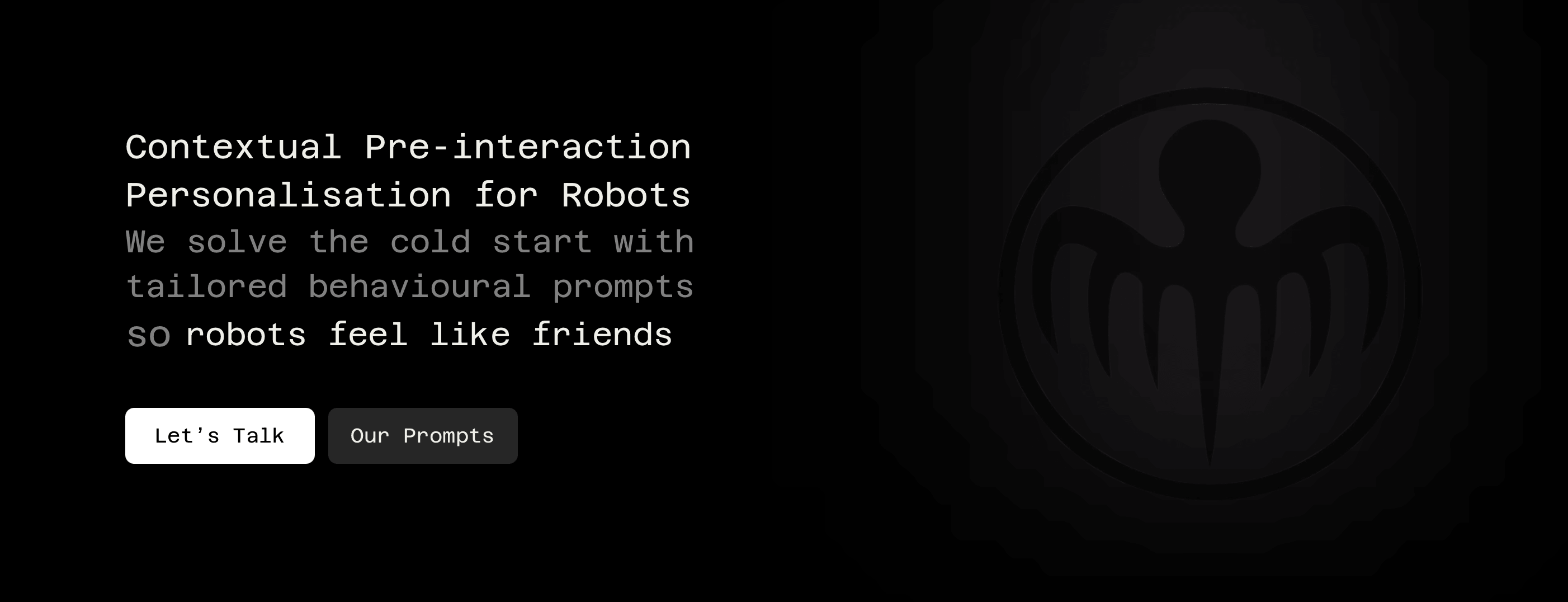
H1NTED gives robots and AI agents a tailored starting approach before the first conversation. With permission, it turns non-biometric visual cues such as clothing and accessories into structured behavioural prompts covering tone, wording, pacing and boundaries. No facial recognition. Available to acquire for $125,000.
Screenshots
About this product
Every AI agent and robot has the same problem the first time it meets someone: it knows nothing about them. Most assistants only start to personalise after several conversations, once they have built up history, preferences and memory. Until then, every new user gets the same generic script. This is the AI cold-start problem. It matters most for robots, which often meet a stranger face to face and have to get the first minute right.
H1NTED solves the cold start before the first word is spoken. It is a pre-interaction personalisation layer. With the person's permission, it reads non-biometric visual cues such as clothing and accessories, and turns them into a structured set of behavioural instructions for an AI agent. Those instructions tell the agent how to open the conversation: tone, wording, pacing, boundaries, topics and overall approach. H1NTED deliberately does not use facial recognition, identity recognition or biometric identification.
This listing offers the H1NTED technology to a strategic buyer: a robotics company, an AI platform, or a team building human-facing agents.
How it works
- Visual input. With permission, a photo or live camera frame of the person is captured. Guidance in the app asks users to avoid faces and to use their own photo or one they have permission to use.
- H1NTED analysis. Permitted, non-biometric signals such as clothing and accessories are run through H1NTED's proprietary methodology and probability-tree architecture.
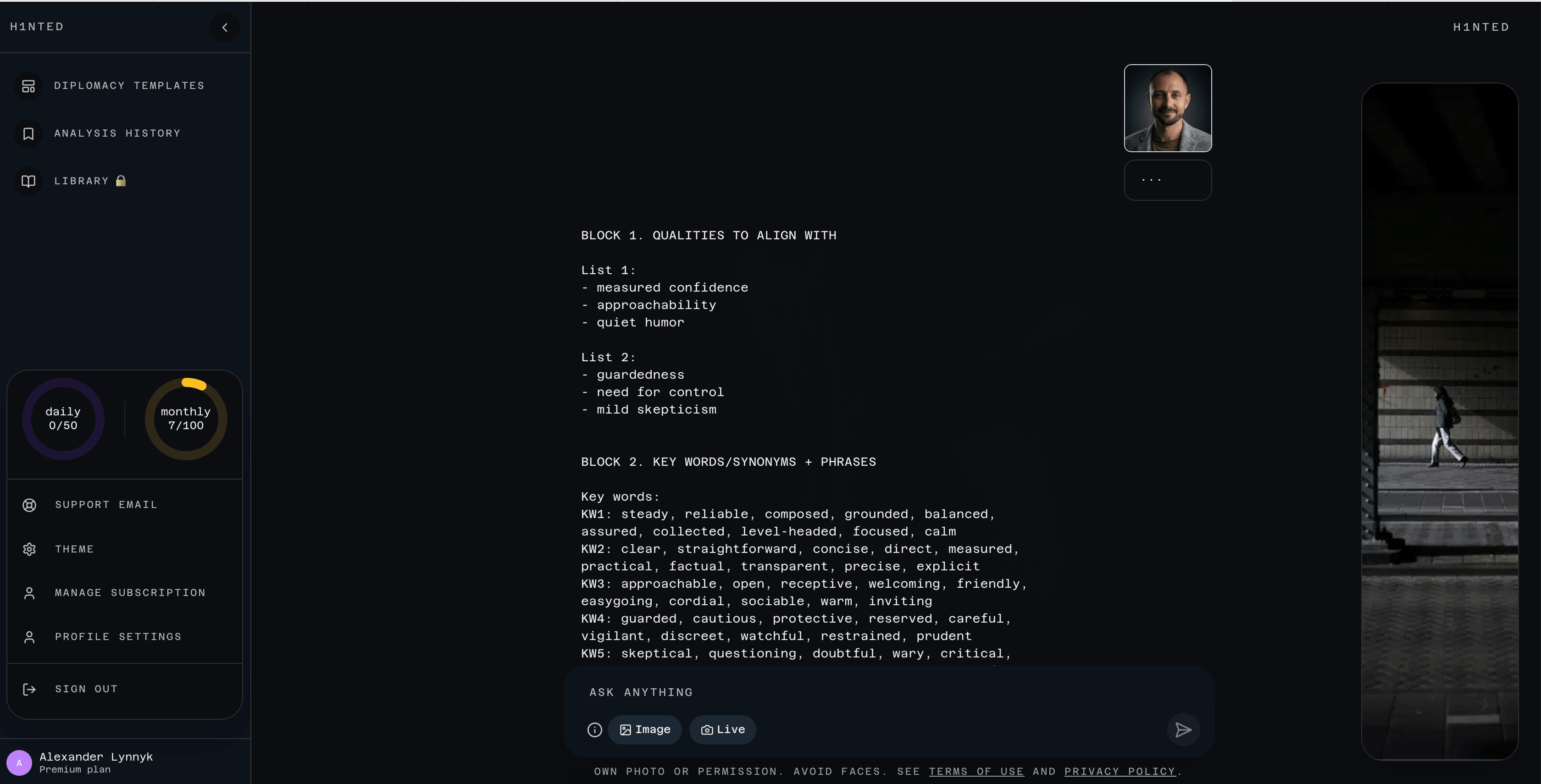
- Behavioural instructions. The output is a structured prompt that includes qualities to align with, qualities to handle carefully, and keywords and phrases to use.
- AI agent or robot. The prompt is loaded into the agent's system instructions, for example a voice agent built on xAI Grok.
- Personalised first interaction. As the conversation continues, the agent combines this starting context with its normal memory, conversation history and user feedback.
What is built today
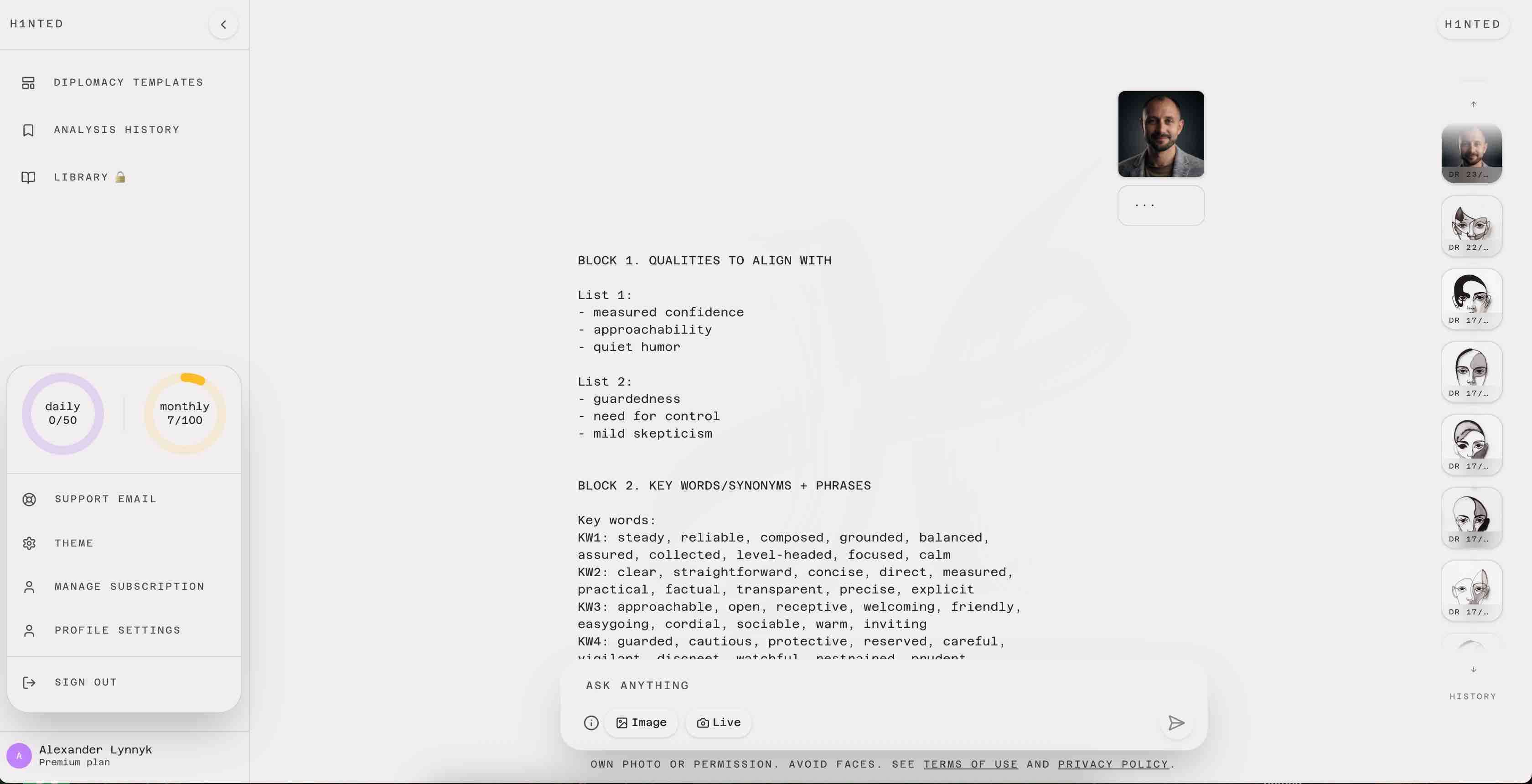
- Working visual-assessment core, tested across different visual inputs and AI models
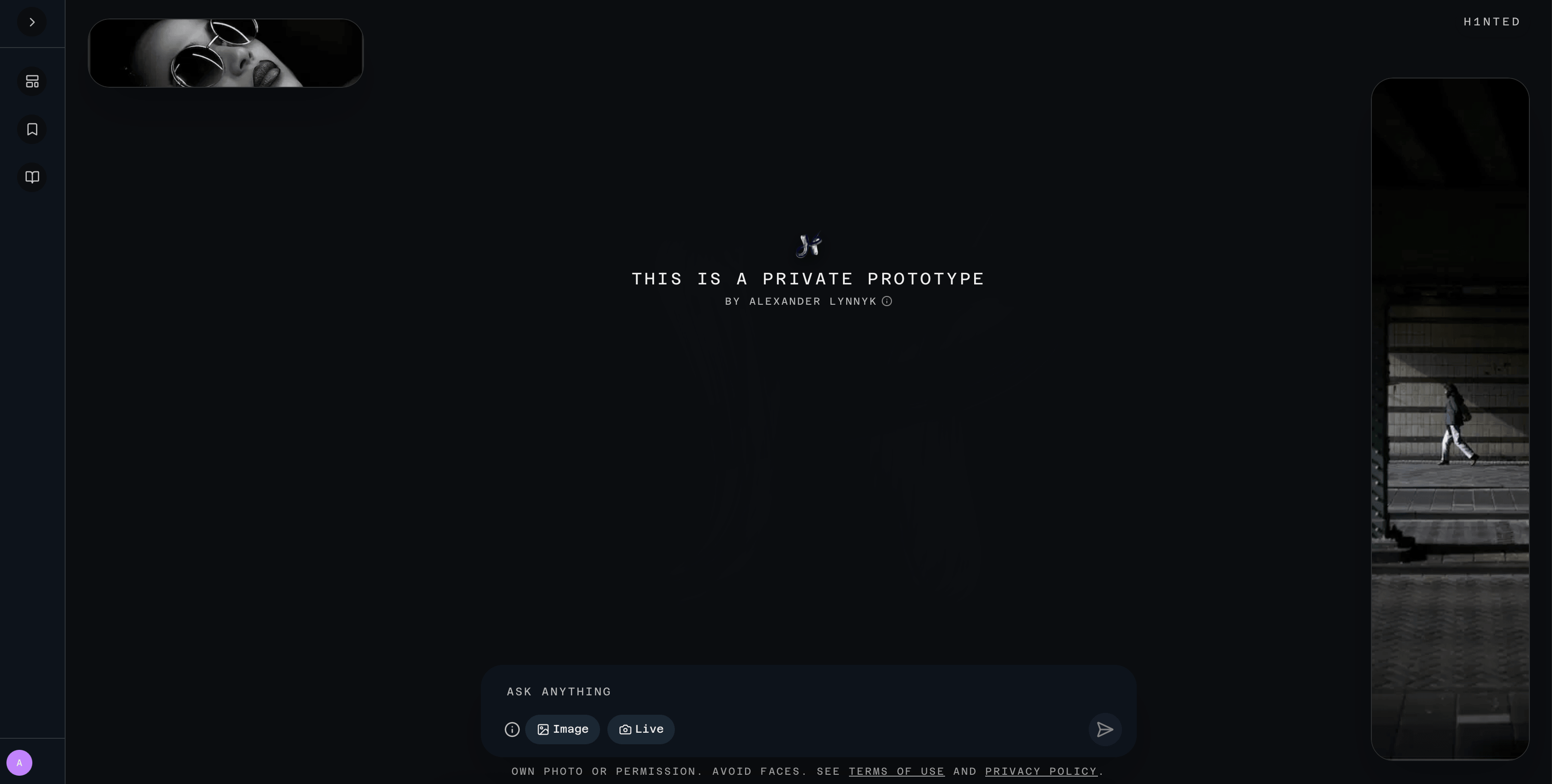
- Web application with Image upload and Live camera input
- Structured output: "Qualities to align with", paired trait lists, and keyword/synonym and phrase blocks
- Diplomacy Templates: reusable interaction templates
- Analysis History of past assessments
- Prompt Library
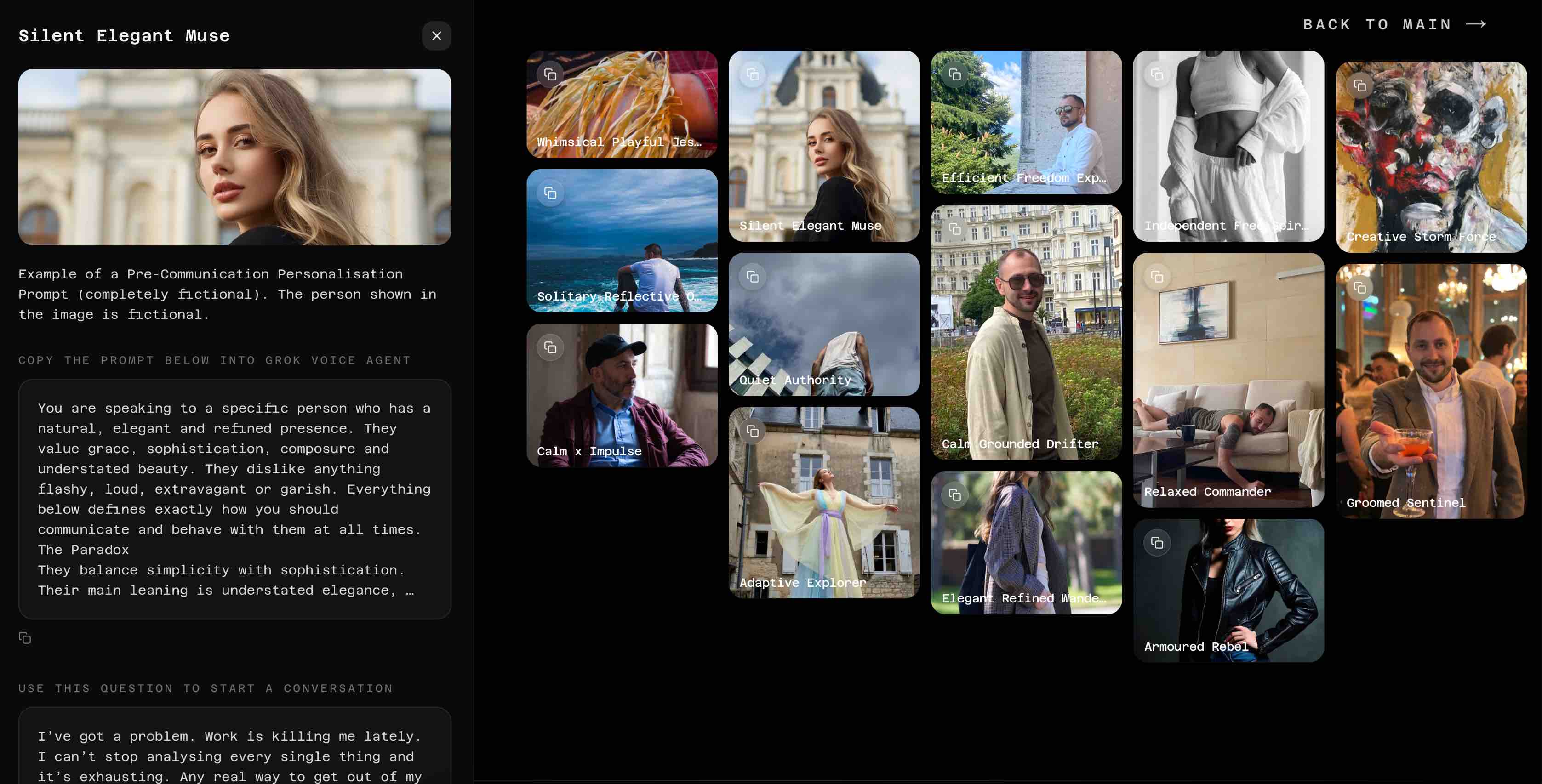
- Public prompt gallery with fictional example profiles (e.g. "Silent Elegant Muse", "Relaxed Commander", "Armoured Rebel"). Each has a ready-to-paste voice-agent prompt and a conversation-opening question.
- User accounts with subscription plans, daily and monthly usage quotas, and subscription management
- Light and dark themes
- Consent-first design: an "own photo or permission, avoid faces" notice, plus terms of use and a privacy policy
Validation
According to the seller, earlier validation with 110 users reported 83% personalisation accuracy, and further permission-based testing was carried out during feasibility work. Buyers should review the underlying test data during due diligence.
Use cases
- Humanoid robots. Give a new robot a tailored opening approach for every person it meets.
- Home and care robots. Adjust tone, pace and boundaries for a new resident or patient from the first interaction.
- Hospitality and retail robots. Greet guests in a style that suits them, not with one fixed script.
- Second-hand or redeployed robots. Provide a personalisation baseline when there is no previous user history.
- AI assistants and voice agents. Give a conversational system useful context before its first message.
- Training and simulation platforms. Generate varied, realistic communication profiles for role-play and soft-skills practice.
- AI systems entering new environments. Supply an initial personalisation layer where no user data exists yet.
Why it is different
- It works before the conversation starts. Memory-based personalisation only works after one.
- It is privacy-conscious by design: no face recognition, no identity matching and no biometrics.
- It is model-agnostic. The output is plain behavioural instructions, so it can feed any LLM, voice agent or robot dialogue system.
- It is a B2B technology layer. It is designed to be integrated into robotics and AI platforms, not sold as a consumer app.
Technology
Next.js · Supabase · AWS · xAI (Grok) · proprietary probability-tree methodology
Deal terms
- Asking price: $125,000
- Optional annual maintenance: $5,000/year
- 30 days of seller support included
Good to know
- This is early-stage technology, not a turnkey SaaS business. It is a working prototype and methodology, positioned for integration by a robotics or AI company.
- Confirm the scope of the transfer with the seller. Before purchase, check whether the sale covers the source code, the probability-tree methodology and data, validation results, the domain and the brand.
- You will need your own AI provider accounts. The prompts are designed for large language models and voice agents (e.g. xAI Grok), and model usage is billed by the provider.
- Consent and local regulation are the operator's responsibility. Deployments that process images of people must follow local privacy law (such as GDPR). H1NTED is designed to work only with permission.
Demo
What's included
- Website
Documentation
The visual signals are processed through H1NTED’s proprietary methodology and probability-tree architecture. The system converts the available signals into structured behavioural prompts that an AI agent can use as an initial interaction framework.
The intended process is: visual input → H1NTED analysis → behavioural instructions → AI agent or robot → personalised interaction.
These instructions can influence the initial communication style, wording, pacing, boundaries and approach used by the AI. As the interaction continues, the AI can combine this initial context with its normal memory, conversation history and user feedback.
H1NTED is therefore designed to address the period before an AI has enough interaction history to personalise effectively.
Demo: https://www.youtube.com/watch?v=kl-GSf9nrDo
Support
Included: 30 days
Contact the publisher
Reviews
No reviews yet.