Marlo: AI Personal Assistant App Source Code with Memory, Voice & Android Phone Control
Marlo is a personal AI assistant that remembers what matters across every chat, talks by voice and, on Android, sends texts, opens apps and taps through tasks with the user's approval, reading the screen to verify each step. One backend serves web, iPhone and Android, with a TypeScript SDK. Built with Next.js, Kotlin and Swift.
Screenshots
About this product
Most AI assistants stop at the answer. They can explain how to reply to a message, set a reminder or reorder groceries, but the user still has to open the apps, type the text and tap through the steps. They also forget: every new chat starts from zero, so people repeat their preferences again and again. For a company that wants to ship an assistant that actually does things, building memory, voice, device control and safety checks from scratch is a long and expensive project.
Marlo is a personal AI assistant and "AI operating system for phone and devices" that combines a voice chat companion with lasting memory and, on Android, the ability to act on the phone with the user's approval: sending texts, opening apps and tapping through tasks. With Android Accessibility turned on, it can read the screen to verify that steps actually completed. The same backend serves a web app, iPhone (Home Screen or iOS app) and an Android app. The seller describes the architecture as persistent memory, specialized daemon processes, contextual systems, an ACT action-execution layer and Aegis governance for permissions and safety.
Features
Conversation and memory
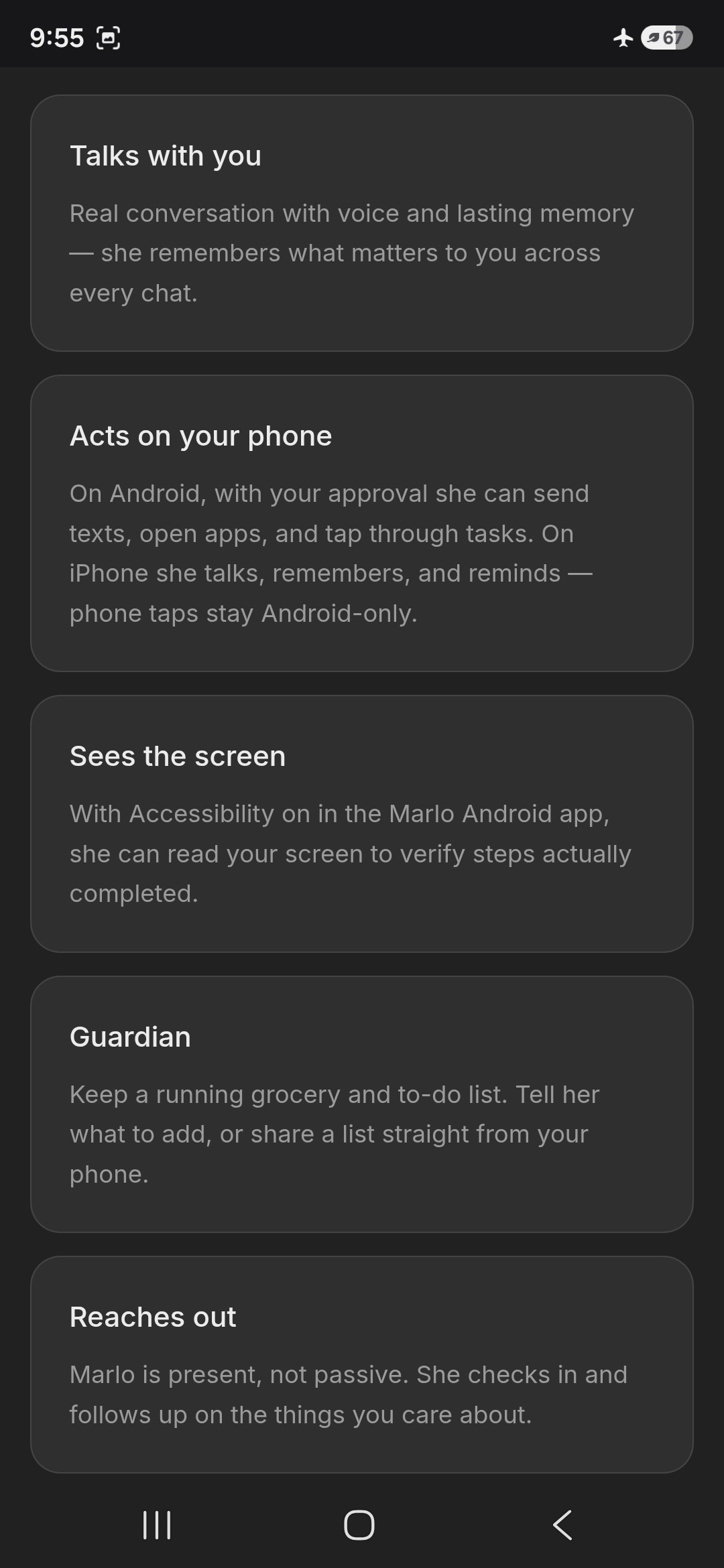
- Talks with you: real conversation by text or voice, with lasting memory so the assistant remembers what matters to the user across every chat
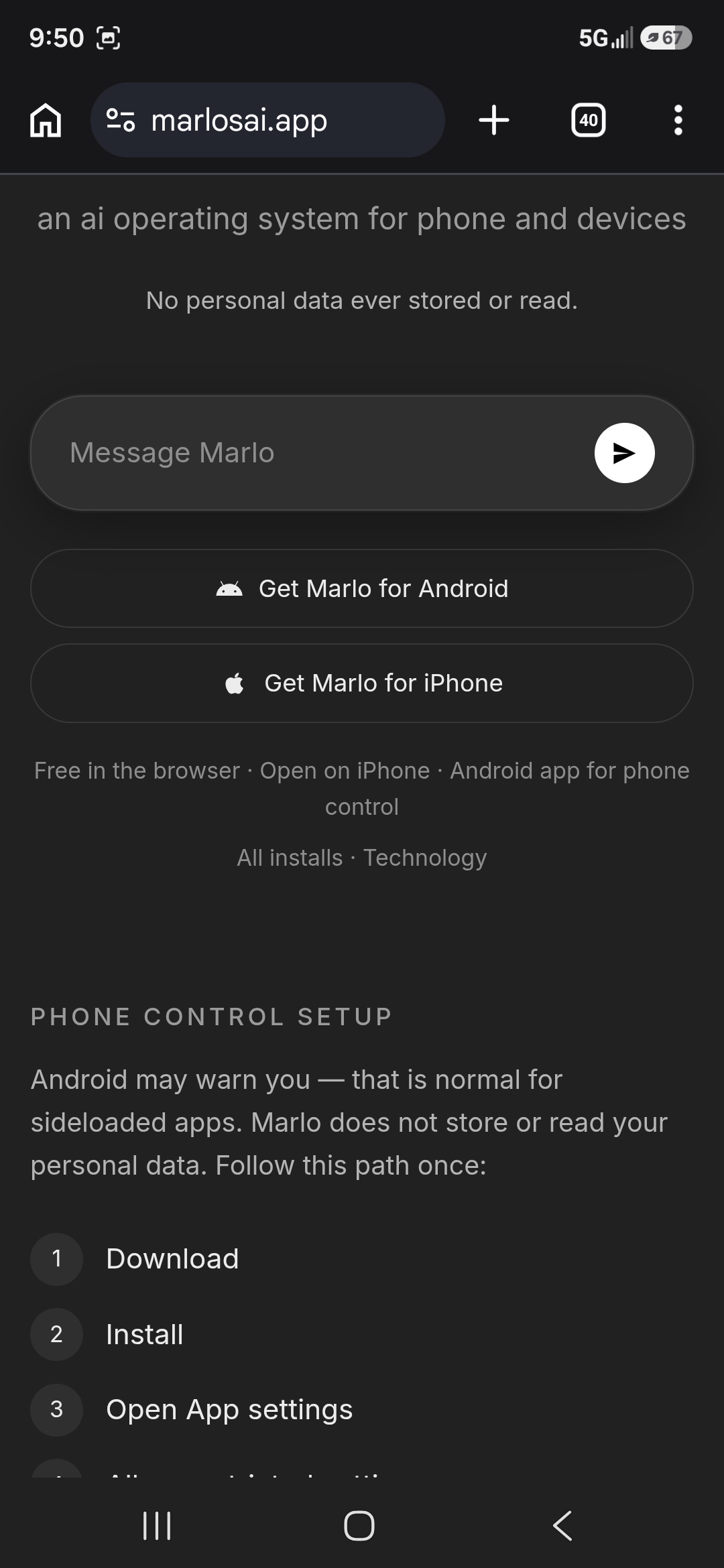
- A simple "Message Marlo" chat box on the web, free in the browser
- Persistent memories, preferences, conversation history and internal state in the data model (per the seller)
- Reaches out: Marlo checks in and follows up on the things the user cares about, instead of waiting to be asked
Phone actions on Android
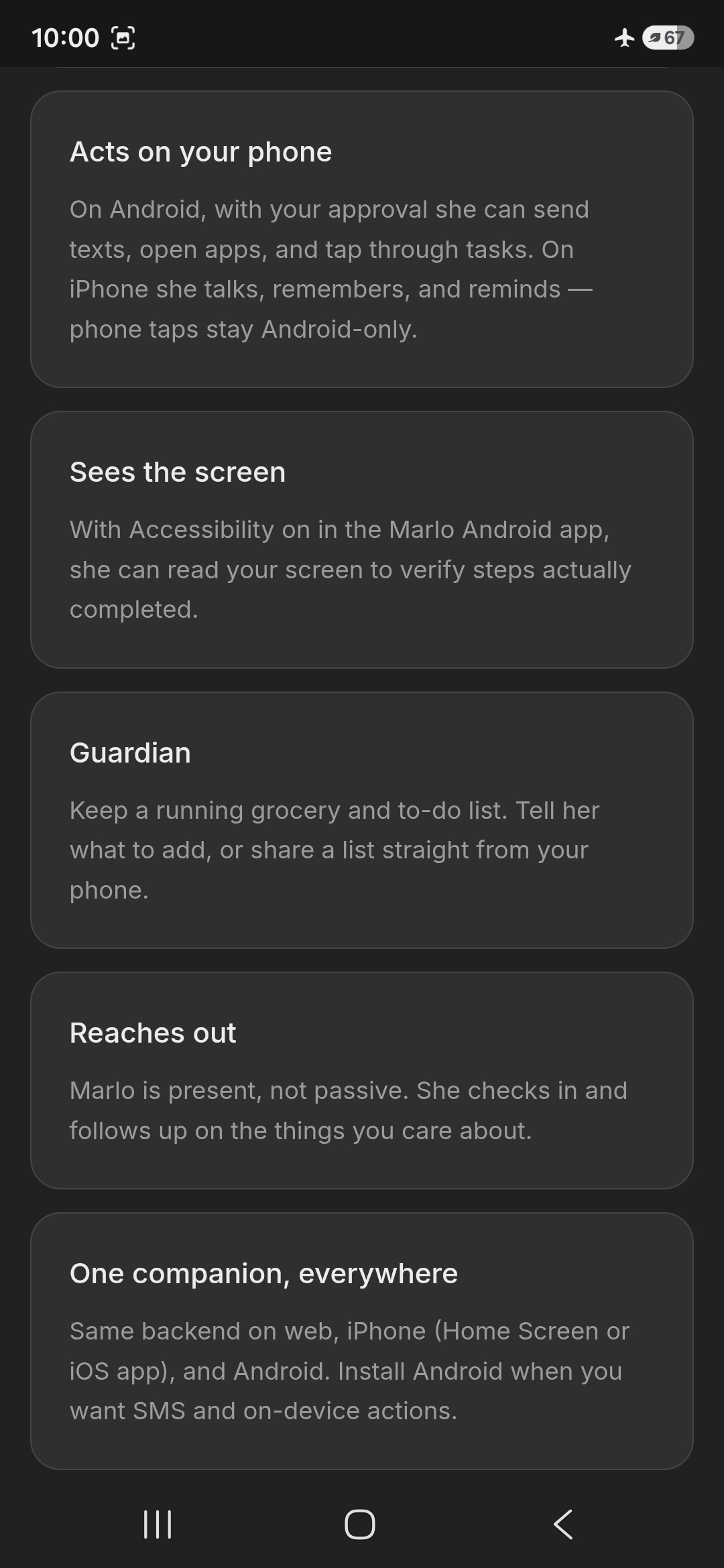
- Acts on your phone: with the user's approval, sends texts, opens apps and taps through tasks
- Sees the screen: with Accessibility enabled in the Marlo Android app, it reads the screen to verify that steps were actually completed
- SMS functionality and supported device automation
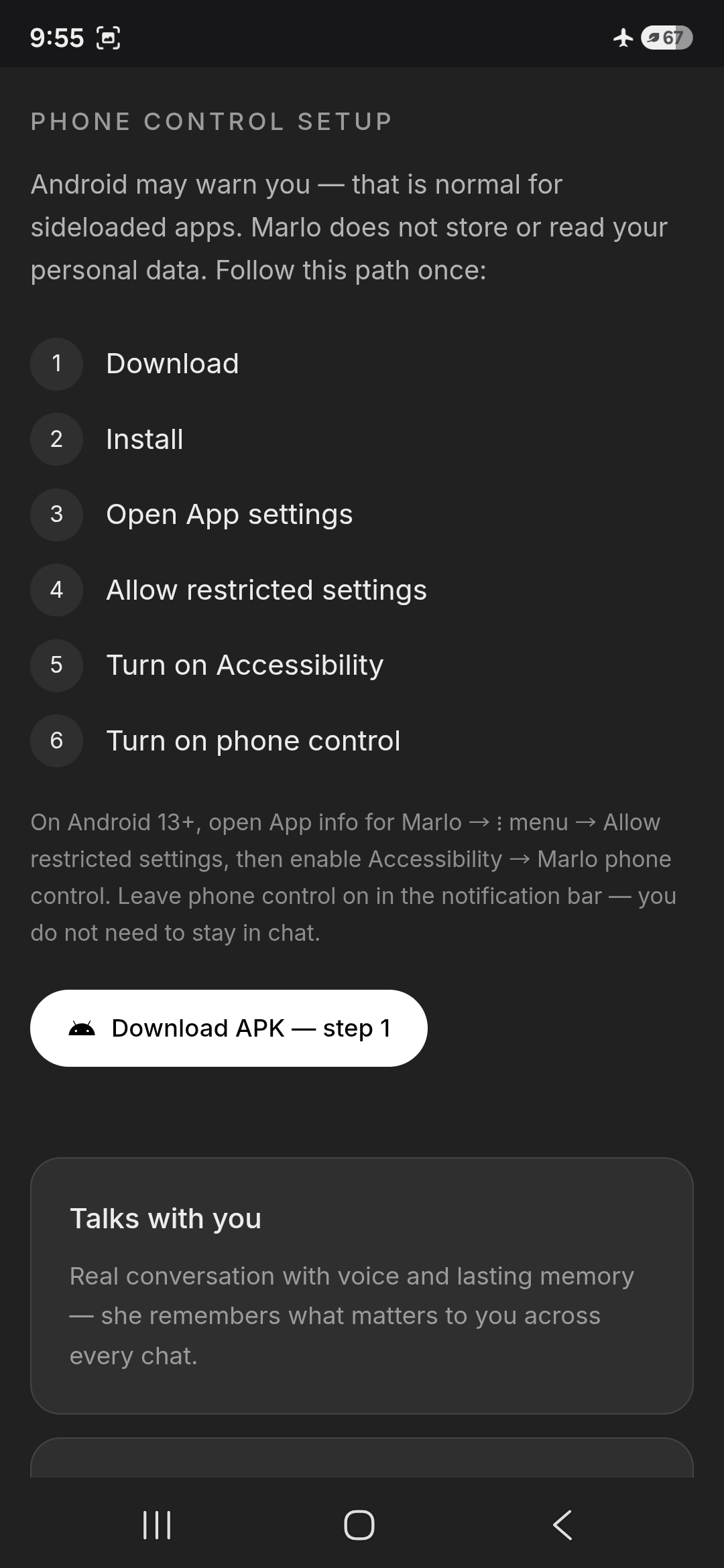
- A guided Phone Control Setup: download the APK, install, open App settings, allow restricted settings (Android 13+), turn on Accessibility, then turn on phone control. Phone control stays on in the notification bar, so the user does not need to stay in the chat
- Sensitive actions can require user approval (per the seller)
Everyday assistance
- Guardian lists: keep a running grocery and to-do list, add items by telling Marlo, or share a list straight from the phone
- Reminders, messaging help and, per the seller, AI-driven shopping and task execution
One companion, everywhere
- Same backend on web, iPhone and Android
- On iPhone, Marlo talks, remembers and reminds; phone taps stay Android-only
- Install the Android app when you want SMS and on-device actions
Architecture (seller-described)
- Specialized daemon processes and contextual state
- ACT for action execution and Aegis for permissions and safety
- Workflows, tasks, permissions and execution outcomes stored per user
- A TypeScript developer SDK
Who it is for
- AI companies adding persistent memory, context and real task execution to an existing assistant or chatbot
- Smartphone and electronics makers looking for a voice assistant with on-device automation
- Enterprise software companies exploring workflow automation that reduces manual work in apps
- Consumer tech brands launching a personal AI companion that remembers preferences, helps with messages and manages reminders
- Fintech, commerce, automotive and connected-device teams evaluating agentic shopping or voice interaction, subject to available platform integrations
How it works
- The user opens Marlo in the browser, on iPhone or in the Android app and chats by text or voice.
- Marlo pulls in relevant memories and context and replies or proposes an action plan.
- On Android, with phone control enabled, it carries out approved actions such as sending a text or opening an app.
- It reads the screen through Accessibility to confirm the steps completed, and adapts if they did not.
- Memories, lists and follow-ups carry over to the next conversation on any device.
Ways to monetize
A buyer could offer a free browser tier with a paid plan for phone control and higher usage, sell premium memory or voice features, license the assistant and SDK to device makers or app developers, or offer an enterprise automation edition.
Technology
TypeScript · Next.js · React · Node.js · Kotlin (Android SDK, Accessibility) · Firebase Cloud Messaging · Swift (SiriKit, App Intents) · Playwright · REST APIs · Vercel
What you get
- Web application source code (Next.js / React)
- Android application source code (Kotlin)
- iOS (Swift) and desktop (Node.js / Playwright) components, as listed in the seller's deliverables
- Backend architecture, memory and contextual systems, voice, screen understanding, SMS and workflows
- TypeScript developer SDK
- Associated intellectual property, which the seller states is owned and transferable
- 30 days of seller support
Good to know
- Price. The listed asking price is $5,000,000 with $50,000 for maintenance. This is a strategic-acquisition price, not a typical source-code purchase; confirm the exact scope, IP terms and any revenue or user data with the seller.
- Platforms. The seller's "What's Included" text names the web and Android apps, while the deliverables list also names iOS and desktop. Phone actions are Android-only by design. Confirm how complete the iOS and desktop parts are.
- Android distribution. The screenshots show the Android app installed as a sideloaded APK with restricted settings and Accessibility enabled. Publishing on Google Play would need a review of Google's Accessibility API policy.
- Privacy. The site says no personal data is ever stored or read, while the seller describes persistent memories, conversation history and preferences. Confirm what is stored, where, and how it is protected.
- GDDL. Related GDDL transaction and authorization technology "may be included under agreed acquisition terms"; it is not part of the base listing.
- Accounts. You need your own AI model provider and speech service accounts, Firebase, Vercel and Apple/Google developer accounts. No traction figures are given.
What's included
- Website
- Android
- Ios
- Desktop
Documentation
Main User Flows: Users interact through text or voice. Marlo interprets requests, retrieves relevant context, generates a response or action plan, executes supported tasks, verifies results, and adapts when necessary. Sensitive actions can require user approval.
Data Model: The system manages user accounts, conversation history, persistent memories, preferences, internal state, tasks, workflows, permissions, and execution outcomes.
Integrations: AI model providers, speech services, Android accessibility and device APIs, SMS, sensors, notifications, external APIs, and the TypeScript developer SDK.
Deployment: The platform supports web and Android deployments with backend services and persistent storage. Web infrastructure can be deployed through Vercel; mobile distribution uses the appropriate platform-specific release process.
Support
Included: 30 days
Contact the publisher
Reviews
No reviews yet.