LumaBurst: Windows PC Diagnostic & Technician Reporting Software Source Code (Python)
LumaBurst is a local Windows diagnostic and reporting tool for MSPs, repair shops and IT technicians. It checks the OS, processor, memory, volumes and disks, flags items that need attention and produces a structured customer report, plus duplicate-file and folder-comparison tools. Python source code with 46 automated tests.
Screenshots
About this product
Every computer repair shop and managed service provider runs the same routine dozens of times a week: check in a machine, record what it is, look at the operating system, memory, processor and disks, note anything that needs attention, and then explain the findings to the customer. Done by hand, that work is slow and inconsistent, and the notes rarely look professional. Commercial RMM suites solve it, but they come with subscriptions, cloud dependencies and features a small shop does not need.
LumaBurst is a Windows PC diagnostic and reporting tool written in Python for technicians and MSPs. It runs locally with no required cloud subscription, collects hardware, operating system and storage information, flags items that need attention, and produces a structured customer report with a service-intake header. It also includes file-auditing utilities such as duplicate-file detection and folder comparison. It is sold as a complete source code asset that a buyer can customize, extend or rebrand.
Features
Service intake and reports
- A Quick Scan mode that produces a structured report
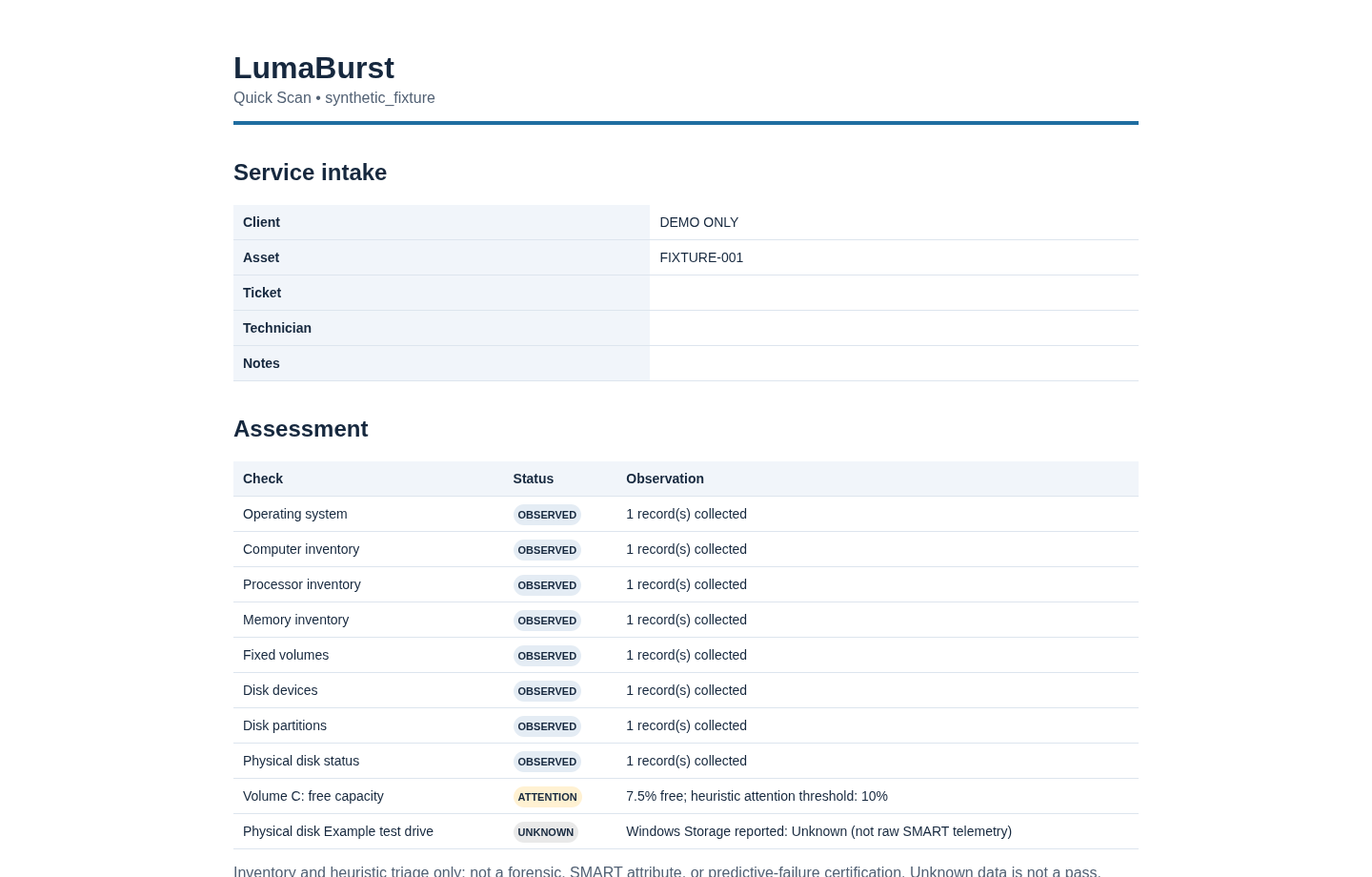
- A service intake section with client, asset, ticket, technician and notes fields
- An assessment table listing each check with a status (Observed, Attention or Unknown) and an observation
- A clear disclaimer on the report that it is inventory and heuristic triage, not a forensic or predictive-failure certification
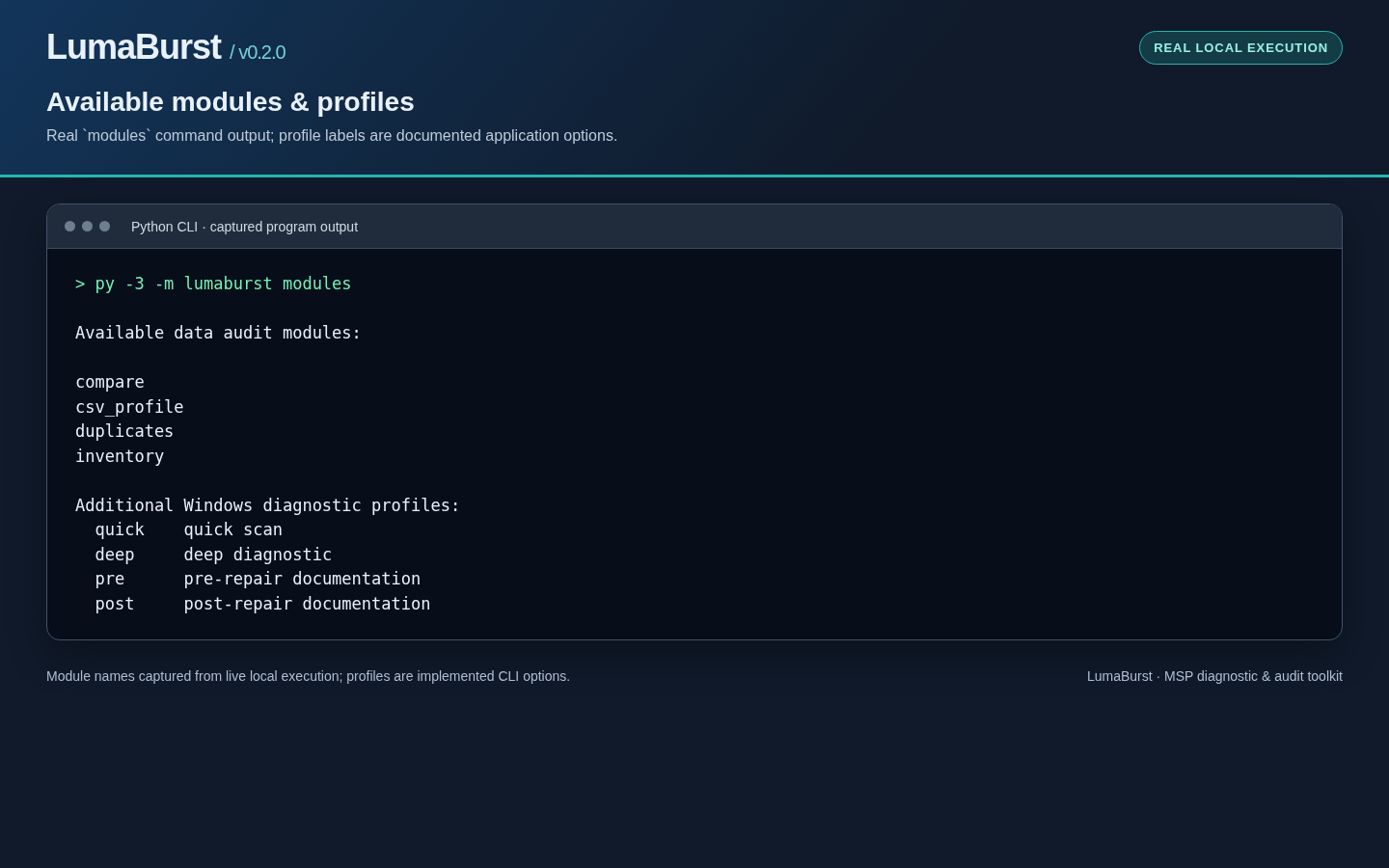
- Support for technician workflows such as computer intake, quick diagnostics, pre-repair assessment, post-repair verification and routine maintenance checks
Hardware, OS and storage checks
- Operating system information
- Computer, processor and memory inventory
- Fixed volumes, disk devices and disk partitions
- Physical disk status as reported by Windows Storage
- Free-capacity warnings per volume against a threshold (e.g. Volume C: 7.5% free, flagged at a 10% attention threshold)
File auditing and data tools
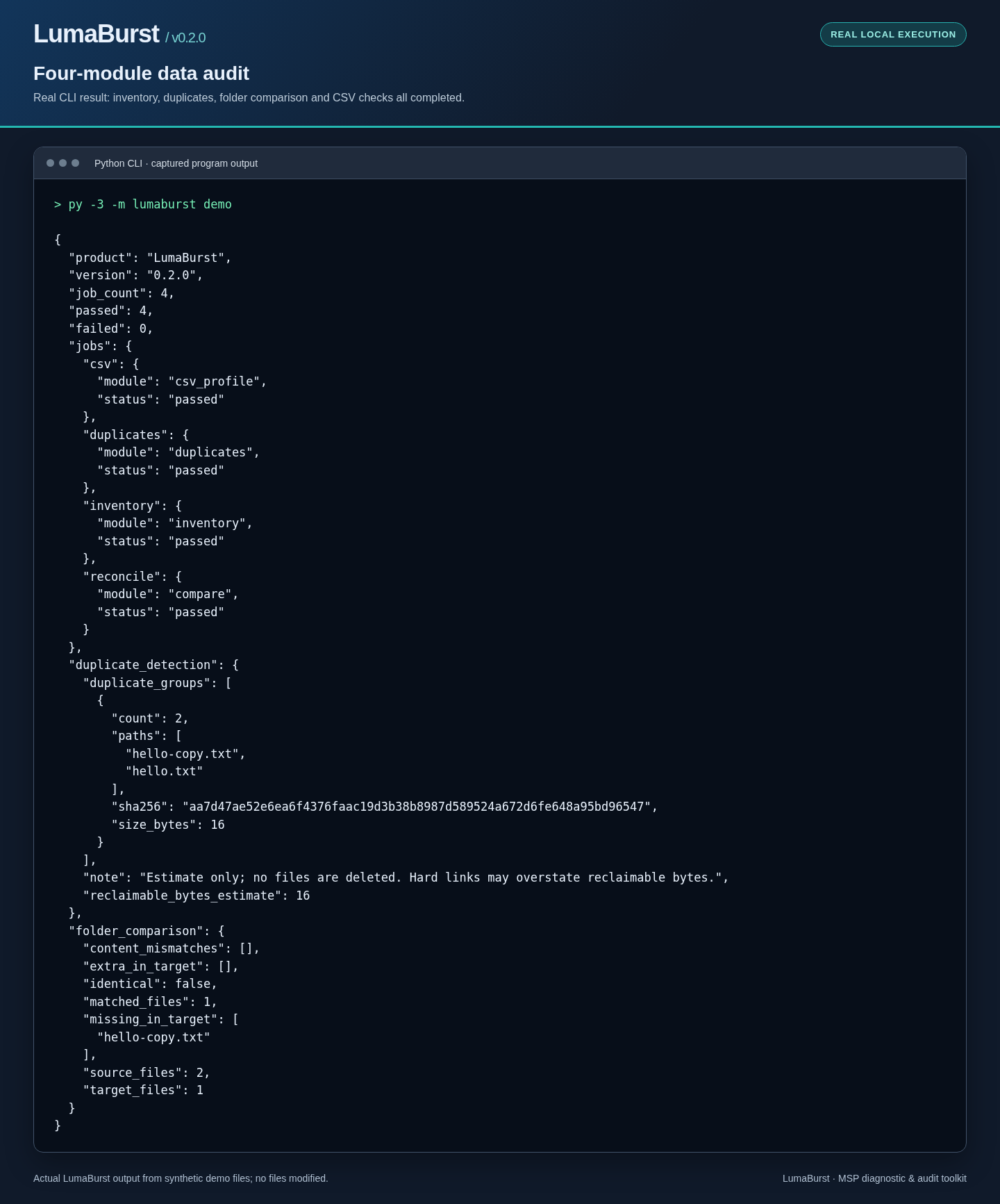
- Duplicate-file detection
- Folder comparison that checks content, not just file size
- CSV data analysis with handling of malformed rows
Modular, safety-minded engine
- A modular job architecture: unknown modules and unknown dependencies are rejected, and a failed job skips the jobs that depend on it
- A cap on the number of jobs per run
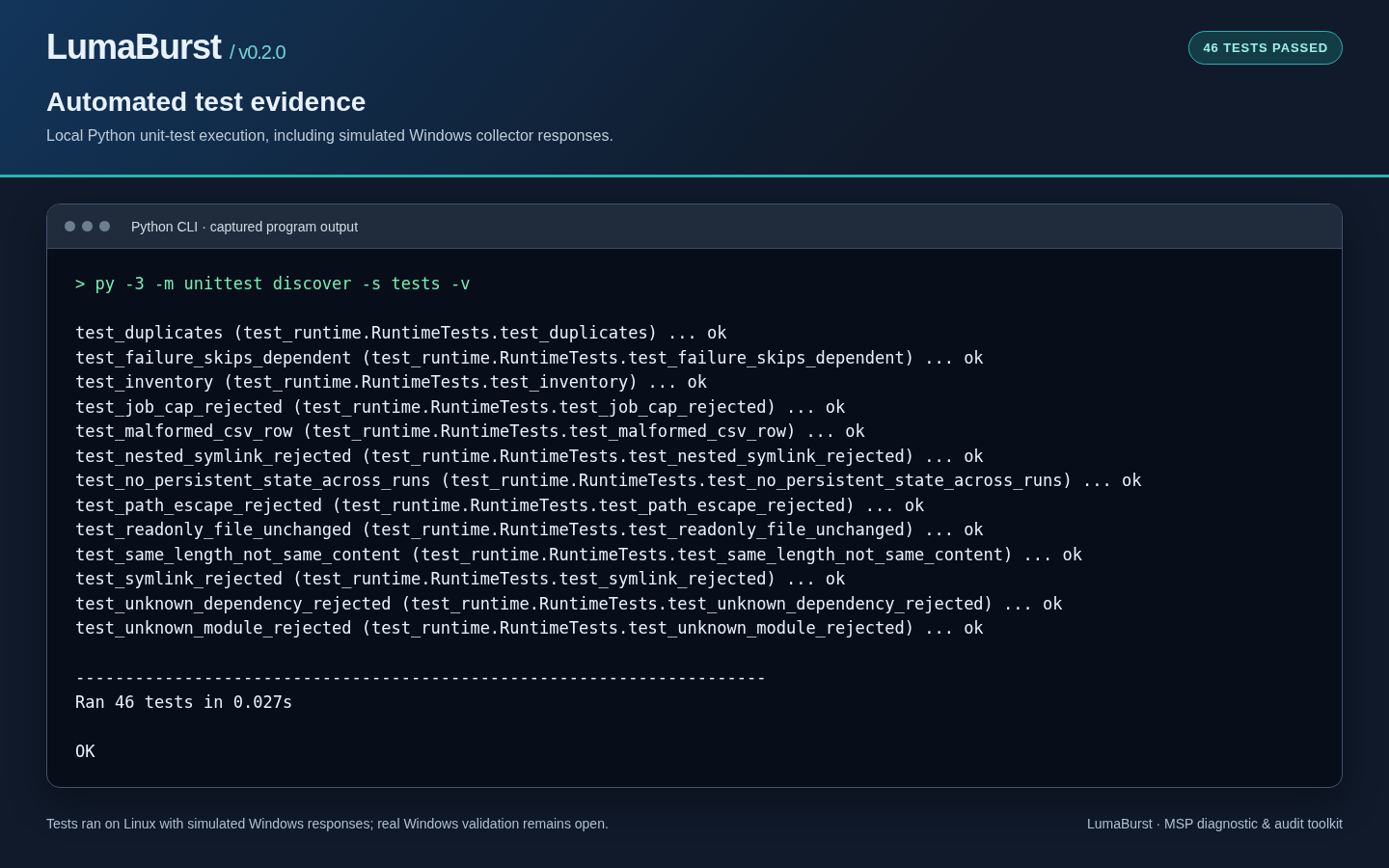
- File-safety protections covered by tests: symlinks and nested symlinks are rejected, path escapes are blocked and read-only files are left unchanged
- No persistent state carried between runs
- Version 0.2.0 with 46 passing automated unit tests, including simulated Windows collector responses
Who it is for
- Managed service providers (MSPs) that want a standard intake and diagnostic report for every machine
- Computer repair shops that want professional, consistent customer-facing documentation
- IT service companies looking to add their own branded tool to their offering
- Developers and software entrepreneurs who want a base for a commercial diagnostic or audit product
How it works
- The technician runs LumaBurst locally on the Windows machine being serviced.
- They fill in the service intake details: client, asset, ticket, technician and notes.
- LumaBurst runs its checks on the operating system, hardware inventory, volumes, disks and partitions.
- Each check is marked Observed, Attention or Unknown with a short observation.
- Optional file-audit jobs find duplicate files or compare folders.
- The technician shares the structured report with the customer and keeps it as a service record.
Ways to monetize
A buyer could sell LumaBurst as a branded tool for repair shops, license it per technician to MSPs, offer a paid "PC health report" service, or bundle it with existing IT support contracts.
Technology
Python 3 · Python unittest test suite (46 tests) · local Windows data collection · no cloud dependency
What you get
- Full LumaBurst source code
- Existing documentation
- Test materials, including the automated test suite
- Exclusive transfer of the agreed software rights on payment and a signed agreement
Good to know
- Early-stage build. This is version 0.2.0, described by the seller as an evaluation build. The 46 tests ran on Linux with simulated Windows responses; real-world Windows compatibility has not yet been validated, and the seller says commercial readiness is subject to that validation.
- Not a SMART or forensic tool. Disk status comes from Windows Storage, not raw SMART telemetry, and the report explicitly says it is not a predictive-failure certification.
- Sold as-is. The seller's terms say no post-sale technical support, no installation help, no maintenance and no free updates. The listing also shows 30 days of support, so confirm which applies before you buy.
- Pre-revenue. No customers, users or revenue are claimed.
- Interface. The screenshots show a generated report and a test run; ask the seller for a demo of how technicians launch scans and export reports.
- Contract. The sale is subject to due diligence and an executed transfer agreement, so review the rights being transferred.
What's included
- Desktop
Documentation
Buyers gain a Windows-focused diagnostic and reporting application with source code, hardware and storage inspection, automated file auditing, technician workflows, and professional customer reports.
**Why buy LumaBurst?** Instead of developing a diagnostic application from scratch, an acquiring company can build upon an existing, testable software foundation, customize it for its technicians, integrate additional features, or rebrand it for commercial distribution.
LumaBurst offers opportunities to streamline repetitive diagnostic tasks, standardize service documentation, improve customer communication, and expand an IT company's software offerings.
**Asking Price: $5,000 USD** for the proposed exclusive acquisition of the LumaBurst software asset, subject to final verification and transfer terms.
Support
Included: 30 days
Contact the publisher
Reviews
No reviews yet.