AI Market: Multi-Vendor Marketplace Source Code with AI Search and Seller Dashboard
AI Market is a multi-vendor e-commerce marketplace where sellers run one or more stores and shoppers buy from all of them in one place. It includes Find with AI product search, an AI seller assistant, promo codes, delivery zones, returns and ad placements, built on JavaScript and Supabase. Pre-revenue.
Screenshots
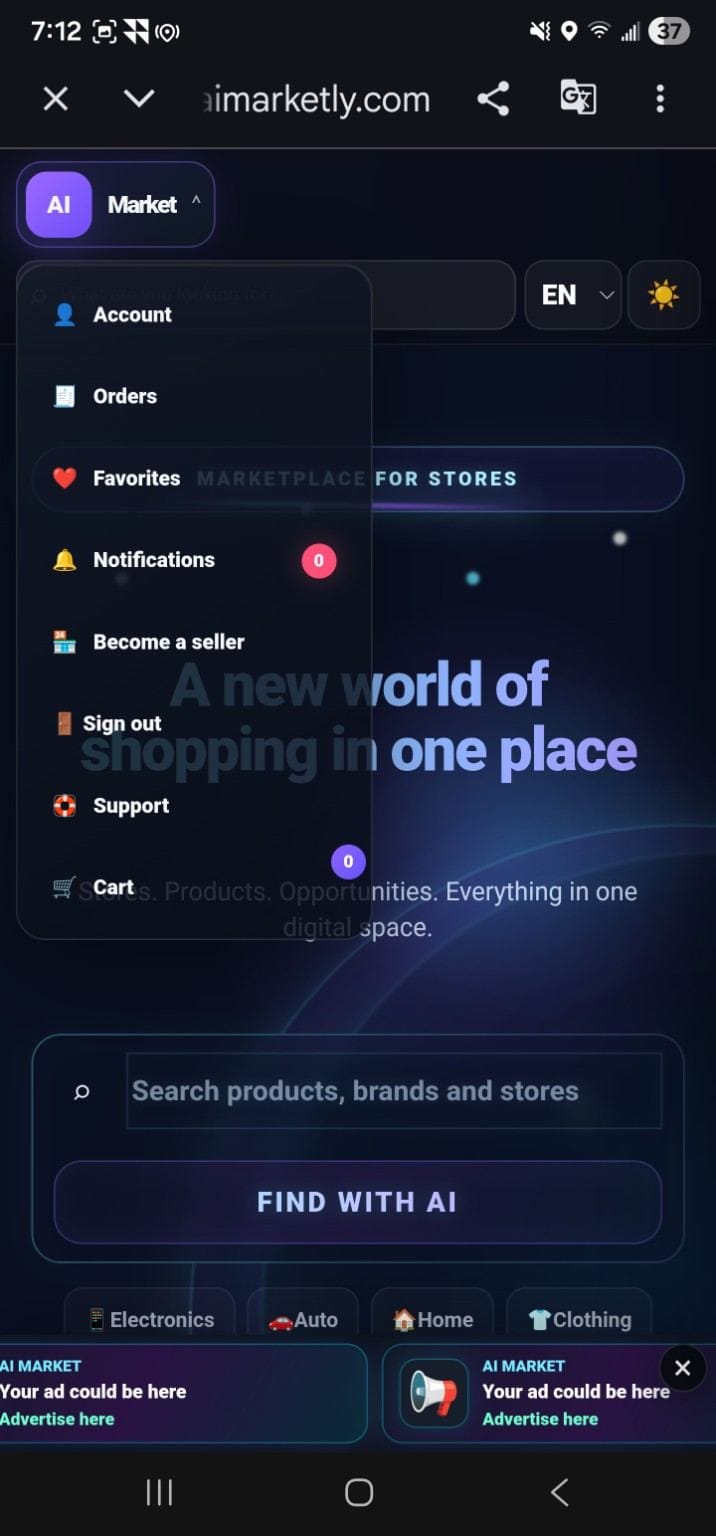
About this product
Building a multi-vendor marketplace from scratch is a long project. Beyond a storefront, you need separate seller accounts, store and product management, inventory, orders, delivery settings, promotions, reviews, returns and refunds, plus permissions that keep buyers, sellers and administrators apart. Founders often spend months on this plumbing before a single store goes live.
AI Market is a multi-vendor e-commerce marketplace that already has those pieces in place. Shoppers browse categories, search across products, brands and stores, and use a Find with AI product search. Sellers get their own dashboard to open one or more stores, publish products, run promotions, configure delivery zones and use an AI seller assistant for product titles, descriptions, keywords and business analysis. The frontend is plain HTML, CSS and JavaScript, with Supabase providing PostgreSQL, authentication, access policies and Edge Functions. The seller reports the platform is deployed on its own domain and is currently pre-revenue.
Features
Shopping experience
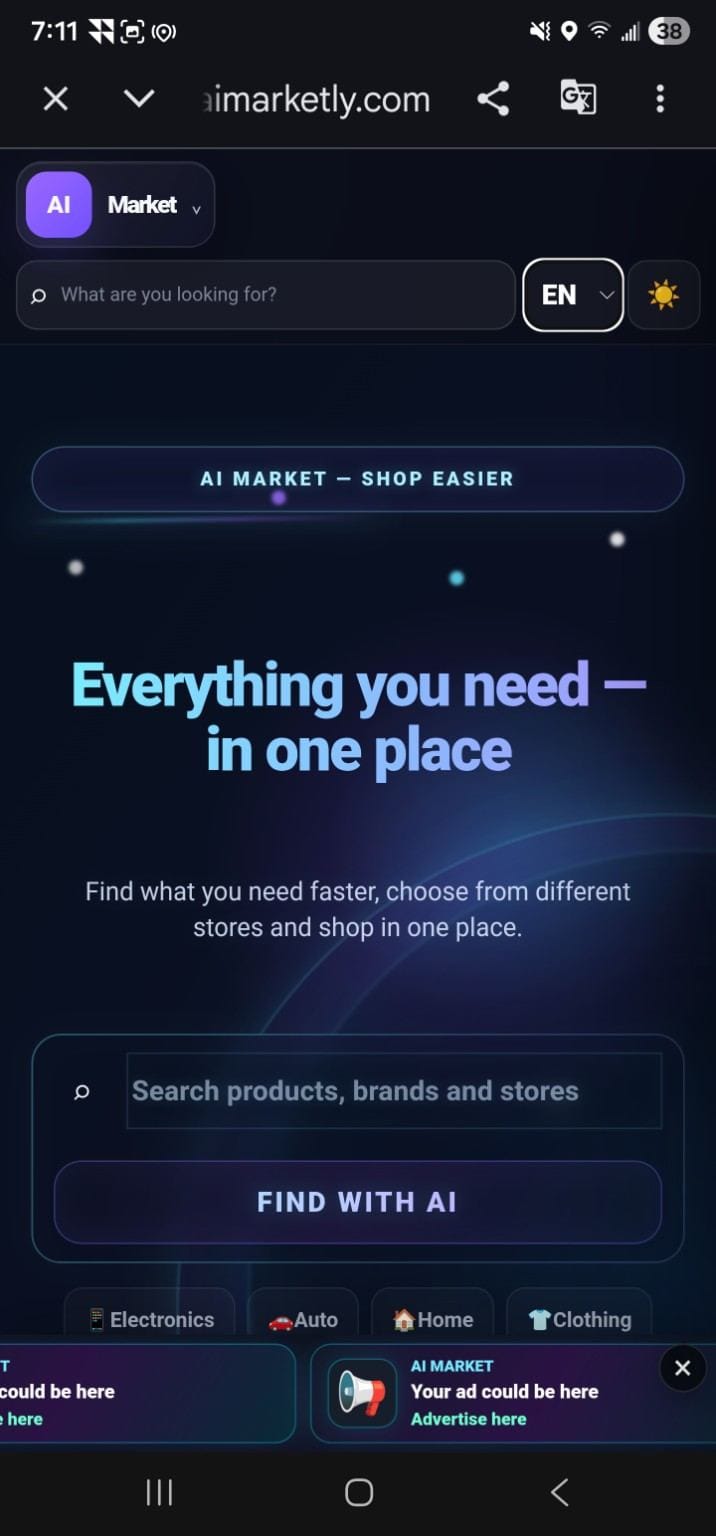
- A home page built around one search box for products, brands and stores, with a Find with AI button for AI-assisted product search
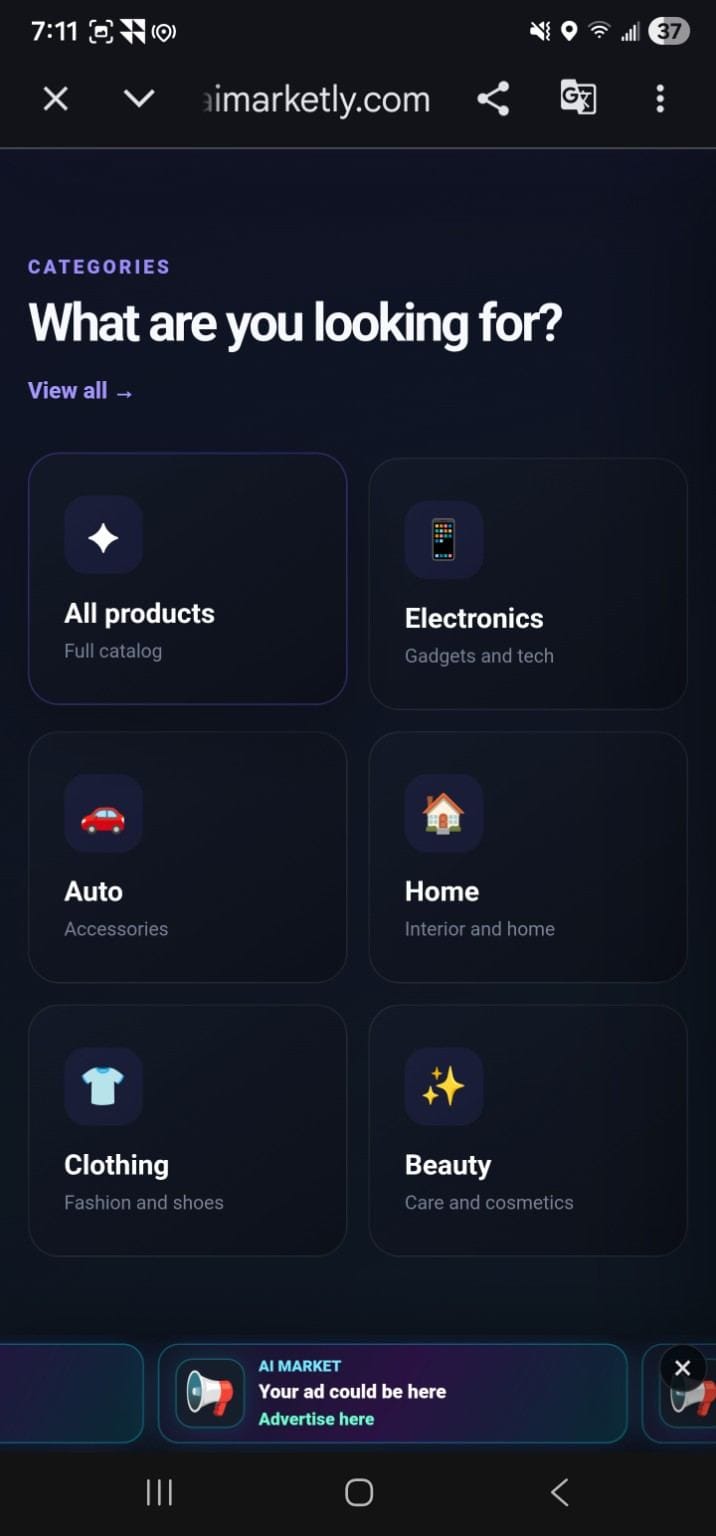
- Category browsing with an "All products" full catalog plus categories such as Electronics, Auto, Home, Clothing and Beauty
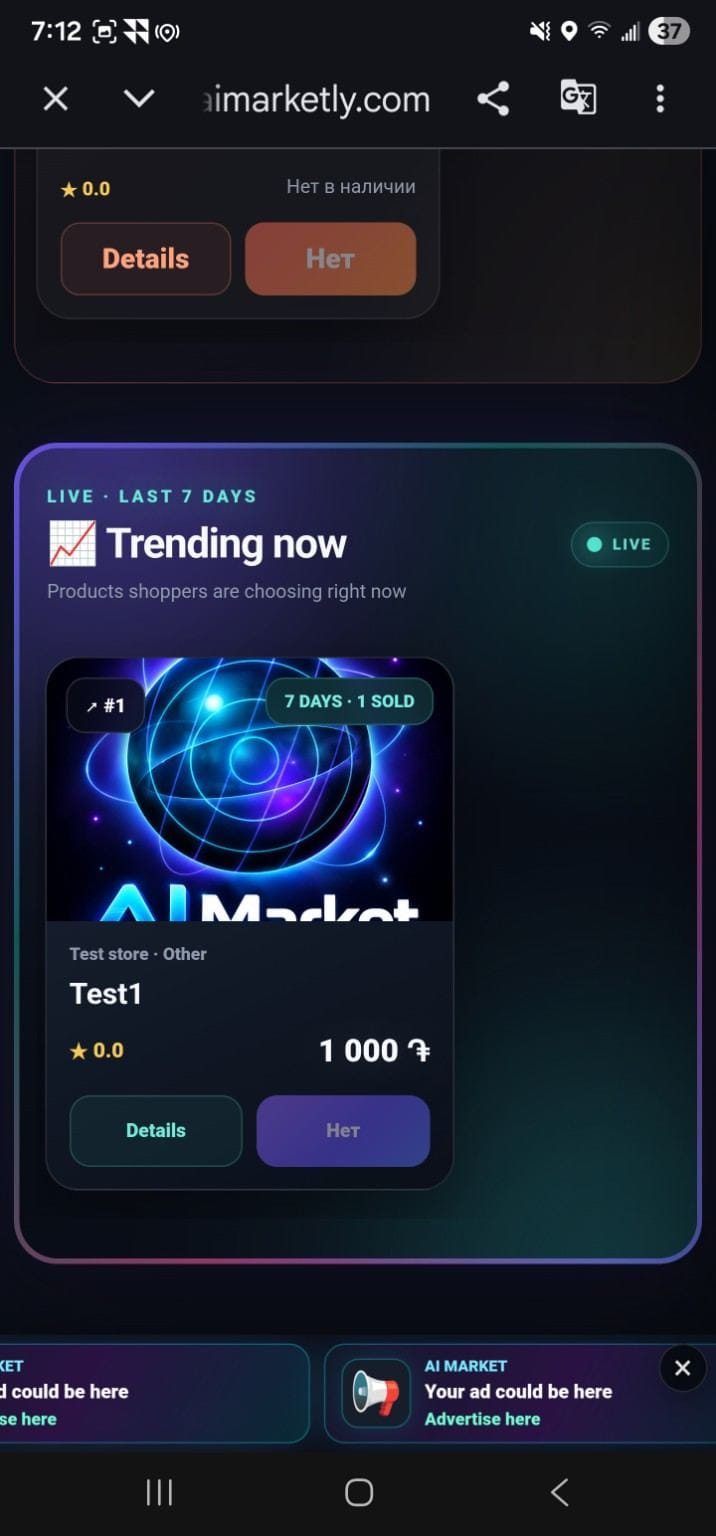
- A Trending now block showing what shoppers chose in the last 7 days, with rank and units sold
- Product cards with store name, category, star rating, price, stock status and a Details button
- Language selector (EN shown) and a light/dark theme toggle
- Customer reviews and ratings
Customer account
- Account, Orders, Favorites, Notifications (with unread counter), Support and Cart in the account menu
- Order tracking, return requests and refund handling (per the seller)
- Checkout with the available payment options, including cash on delivery
- A Become a seller entry point so any customer can open a store
Seller dashboard
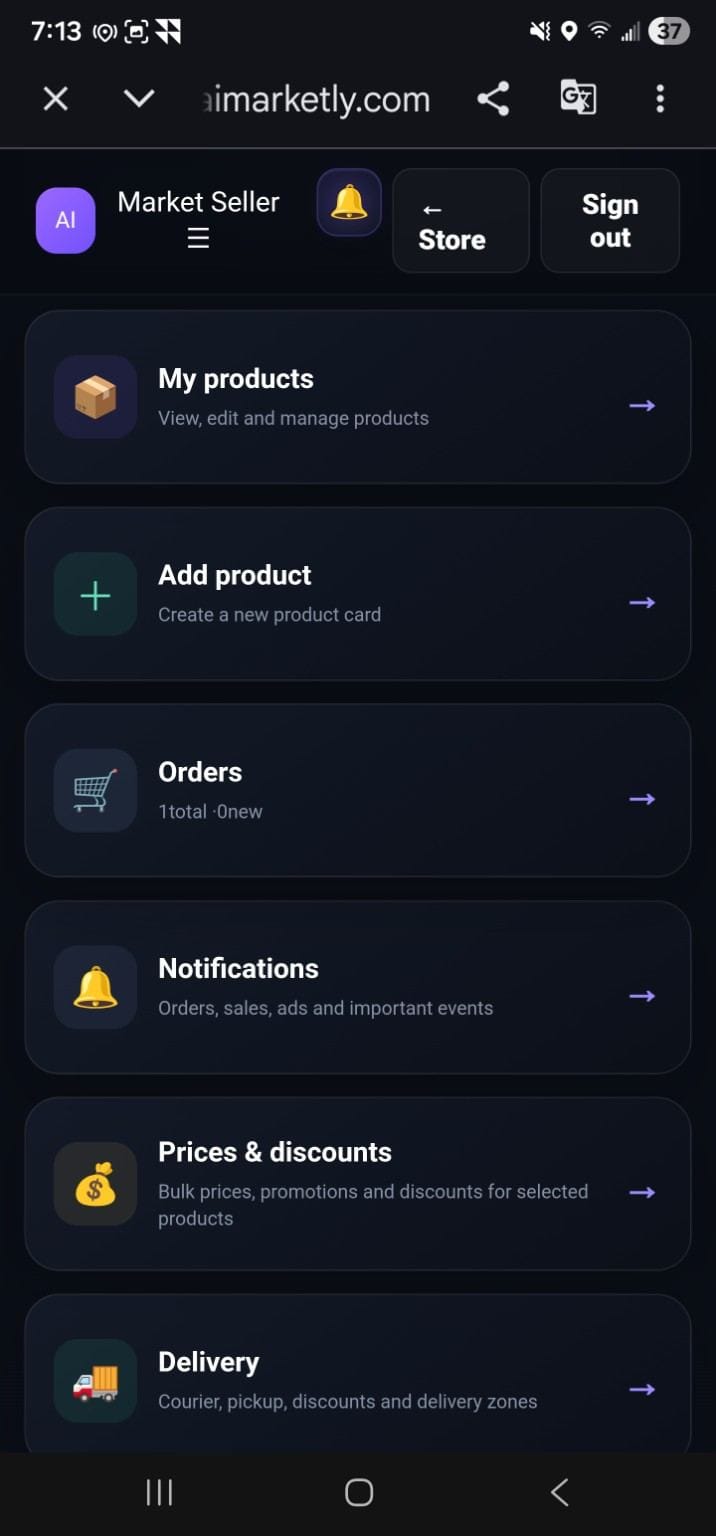
- Store status (active), the seller's account and an AI analysis button
- Multi-store management: a "My stores" switcher and a Create store button; products and orders are shown per selected store
- A Control center showing only what needs attention today, such as new orders and open issues
- My products and Add product to create and edit product cards, prices and inventory
- Orders with total and new counts
- Seller Notifications for orders, sales, ads and important events
- Prices & discounts: bulk prices, promotions, discounts and promotional codes for selected products
- Delivery: courier, pickup, delivery discounts and delivery zones
- Advertising campaigns for sellers
AI tools
- AI product search for shoppers (Find with AI)
- An AI seller assistant that helps prepare product titles, descriptions and keywords
- AI analysis of the seller's business activity from the dashboard
Advertising and administration
- Built-in ad placements ("Your ad could be here / Advertise here") across the storefront
- Administrative functionality, with database policies and server-side operations separating buyer, seller and administrator permissions
Who it is for
- Entrepreneurs and startup founders who want to launch their own multi-vendor marketplace without building it from zero
- Regional marketplaces that bring local shops and independent retailers onto one platform
- Niche e-commerce businesses focused on one product category, such as electronics, auto parts, fashion or beauty
- Agencies and technology companies that want a white-label marketplace base for clients
How it works
- A shopper visits the site, searches or uses Find with AI, and browses categories, stores and trending products.
- They open a product, add it to the cart and check out with an available payment option or cash on delivery.
- Registered customers follow their orders, save favorites, receive notifications and can request a return.
- Any user can choose "Become a seller", create one or more stores and publish products, using the AI assistant for titles, descriptions and keywords.
- Sellers process orders, set prices, discounts, promo codes and delivery zones, and run ad campaigns from their dashboard.
Ways to monetize
A buyer could charge a commission on each sale, offer paid seller plans or store subscriptions, sell the built-in ad placements and seller advertising campaigns, charge for featured or trending positions, or offer the AI seller tools as a premium add-on.
Technology
HTML5 · CSS3 · JavaScript · Supabase (PostgreSQL, Auth, access policies, Edge Functions) · Netlify hosting
What you get
- Source code for the customer-facing marketplace website
- Seller dashboard and admin panel
- Supabase database, access policies and Edge Functions as implemented
- Technical handover, with transfer details agreed during the sale
- 30 days of seller support
Good to know
- Pre-revenue. The seller describes AI Market as a developed software asset, not an established business. The screenshots show a test store and test product, so there are no meaningful sales, sellers or customers to transfer.
- Payments. The seller notes that some payment operations need production provider configuration and verification before commercial use. Confirm which payment gateways are integrated and what is left to set up.
- AI provider. The listing does not name the AI model or API behind the search and seller assistant. Confirm which provider is used, and plan for your own API account and usage costs.
- Localization. The storefront has a language selector, but some strings in the screenshots appear in Russian and prices show in Armenian dram. Check translation coverage and currency settings for your market.
- Admin panel. The screenshots cover the storefront and seller dashboard only. Ask the seller for a walkthrough of the admin panel before buying.
- Domain and accounts. Confirm whether the current domain is part of the sale. You will need your own Supabase and Netlify accounts (or a transfer of the existing ones).
- Web only. This is a responsive web marketplace; no native iOS or Android apps are included.
What's included
- Admin Panel
- Website
Documentation
Buyers visit the public website, browse product categories, search for items, open product pages, and place orders using the available checkout options. Registered customers can access their accounts, review orders, manage favorites, receive notifications, and initiate supported return requests.
Sellers use a dedicated dashboard to create and manage stores, publish products, control inventory, process orders, configure delivery settings, manage promotions, and access AI-assisted tools.
The frontend is hosted through Netlify, while Supabase provides PostgreSQL database services, user authentication, access controls, and Edge Functions. Database policies and server-side operations support the separation of buyer, seller, and administrator permissions.
Payment and order-management workflows are integrated into the platform. Some payment operations require the appropriate production provider configuration and verification before commercial use.
The application is accessible through https://myaimarketly.com and can be further customized, extended, or rebranded by a future owner.
Support
Included: 30 days
Contact the publisher
Reviews
No reviews yet.